The Rosie Home Edit contains affiliate links. If you make a purchase through these links, we may receive a commission. Thank you for supporting the work we do to curate this space.
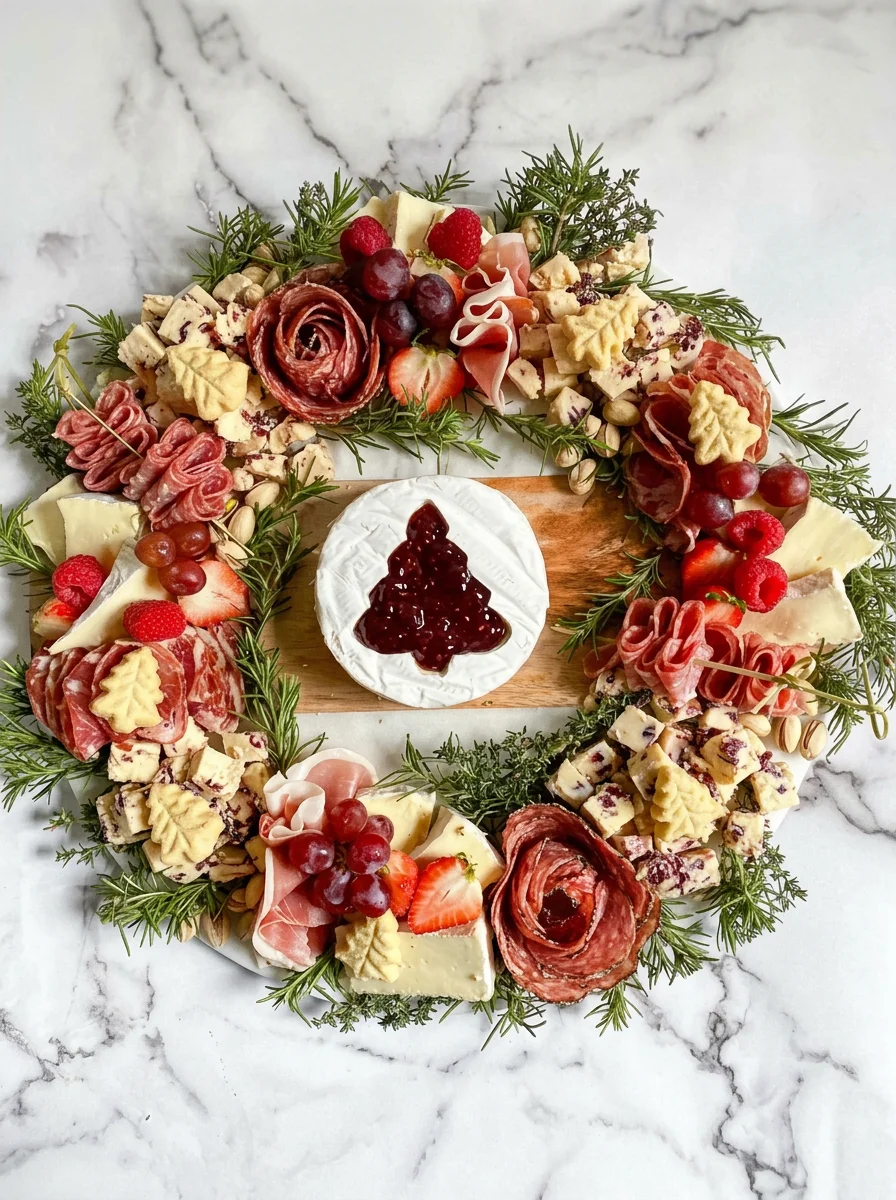
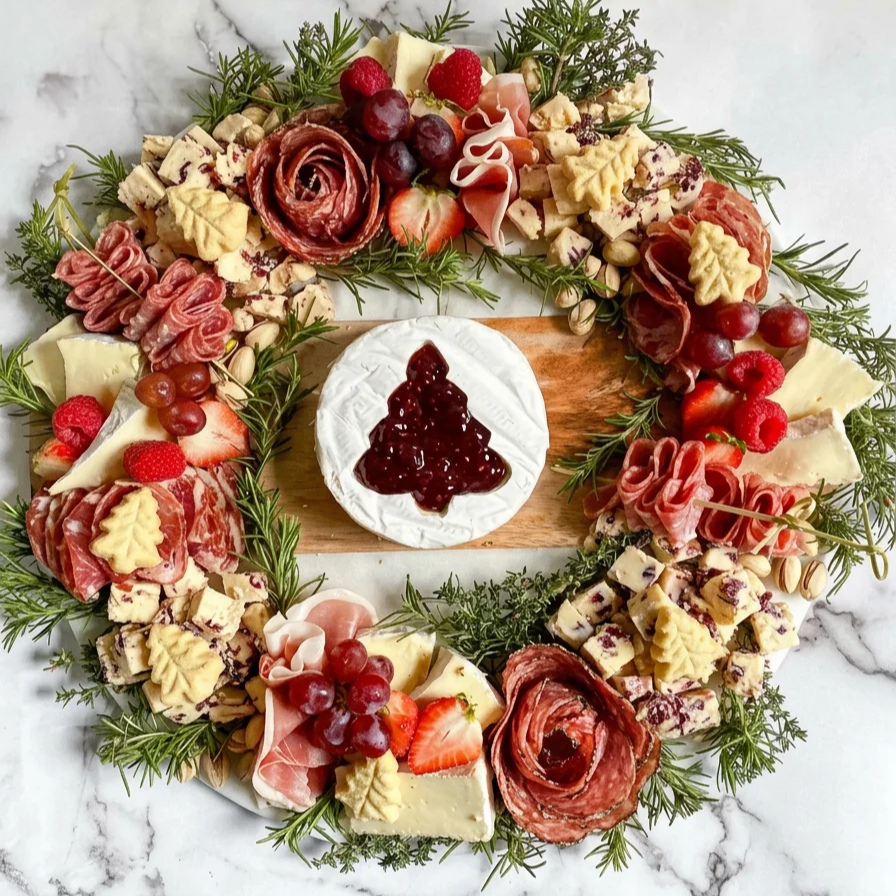
In the realm of seasonal entertaining, few culinary presentations capture the spirit of hospitality quite like a thoughtfully curated grazing board.
As guests arrive out of the crisp winter air into a warm, candlelit home, a dramatic charcuterie board serves as both an immediate feast for the eyes and a natural gathering point. It invites conversation, encourages slow nibbling, and sets an unhurried, generous tone for the rest of the evening.

However, moving from a basic tray of sliced cheese to an elevated, editorial-worthy spread requires an eye for composition, texture, and balance. The modern approach to holiday charcuterie rejects chaotic, overfilled boards in favor of quiet luxury—an organic modern aesthetic that highlights artisanal craftsmanship, seasonal color palettes, and unexpected flavor pairings.
By layering high-end cured meats, ripe artisan cheeses, house-candied nuts, and winter botanical garnishes, you can transform simple ingredients into an edible work of art. This step-by-step guide walks you through building a winter-themed holiday grazing board that looks as though it belongs on the pages of a design magazine while remaining remarkably approachable for the home host.
✦ AT A GLANCE
The Winter Grazing Edit
• Aesthetic Focus: Moody Winter Tones & Organic Textures
• Essential Cheeses: Truffle Tremor, Vintage Aged Gouda, & Creamy Brillat-Savarin
• Seasonal Fruits & Accents: Fresh Figs, Pomegranate Seeds, & Candied Pecans
• The Pairings: Dry Prosecco, Spiked Rosemary Honey, & Artisanal Seeded Crackers
The Core Philosophy: Balance, Texture, and Tone
A truly memorable charcuterie board is built on the principle of sensory contrast. Every element on the board should have a purpose, balancing rich with acidic, creamy with crunchy, and sweet with savory.
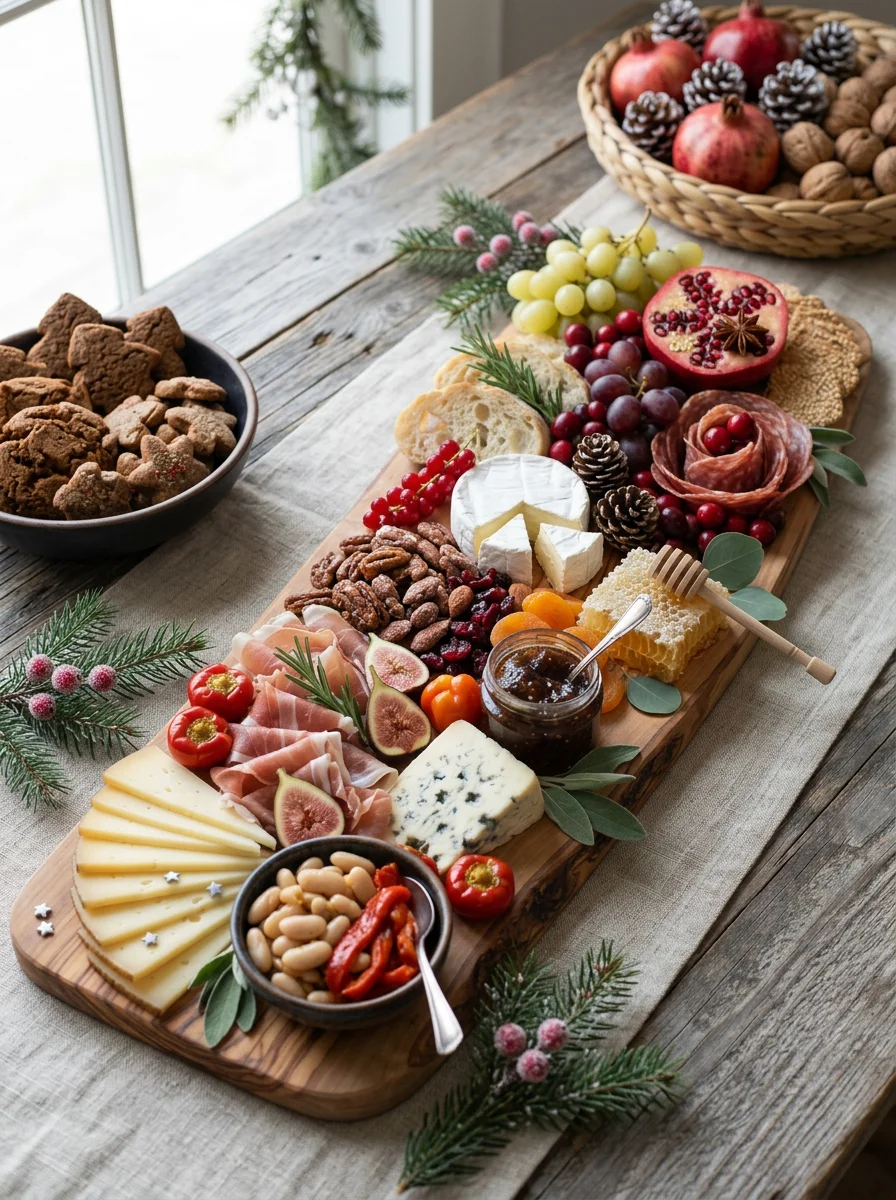
To achieve an elevated winter aesthetic, align your board’s color palette with the season. Step away from neon-colored processed fruits or overly bright garnishes. Instead, draw inspiration from a muted, moody winter landscape. Focus on deep burgundy reds, rich amber golds, earthy sage greens, creamy off-whites, and dark slate tones.
The ingredients themselves should reflect high quality over massive quantity. Sourcing three or four exceptional cheeses from an artisanal creamery will always elevate your board more than offering a dozen mediocre choices. When every item on the board is selected with intention, the final presentation feels harmonious, luxurious, and effortlessly sophisticated.
SHOP THE EDIT

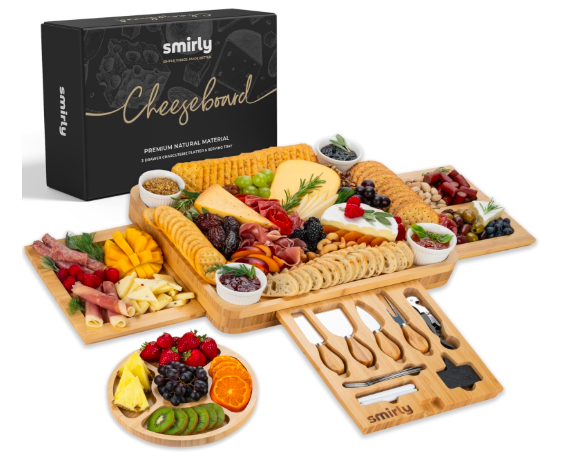
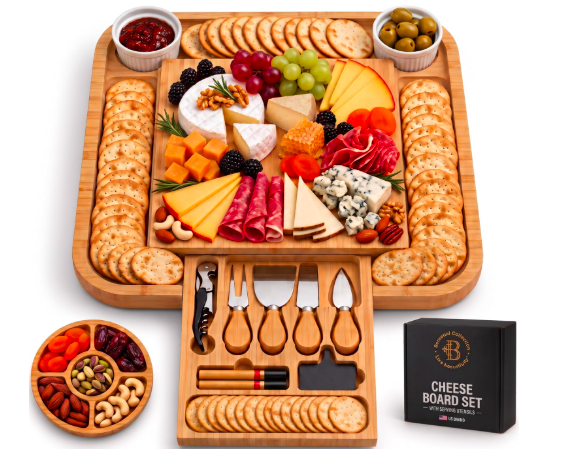

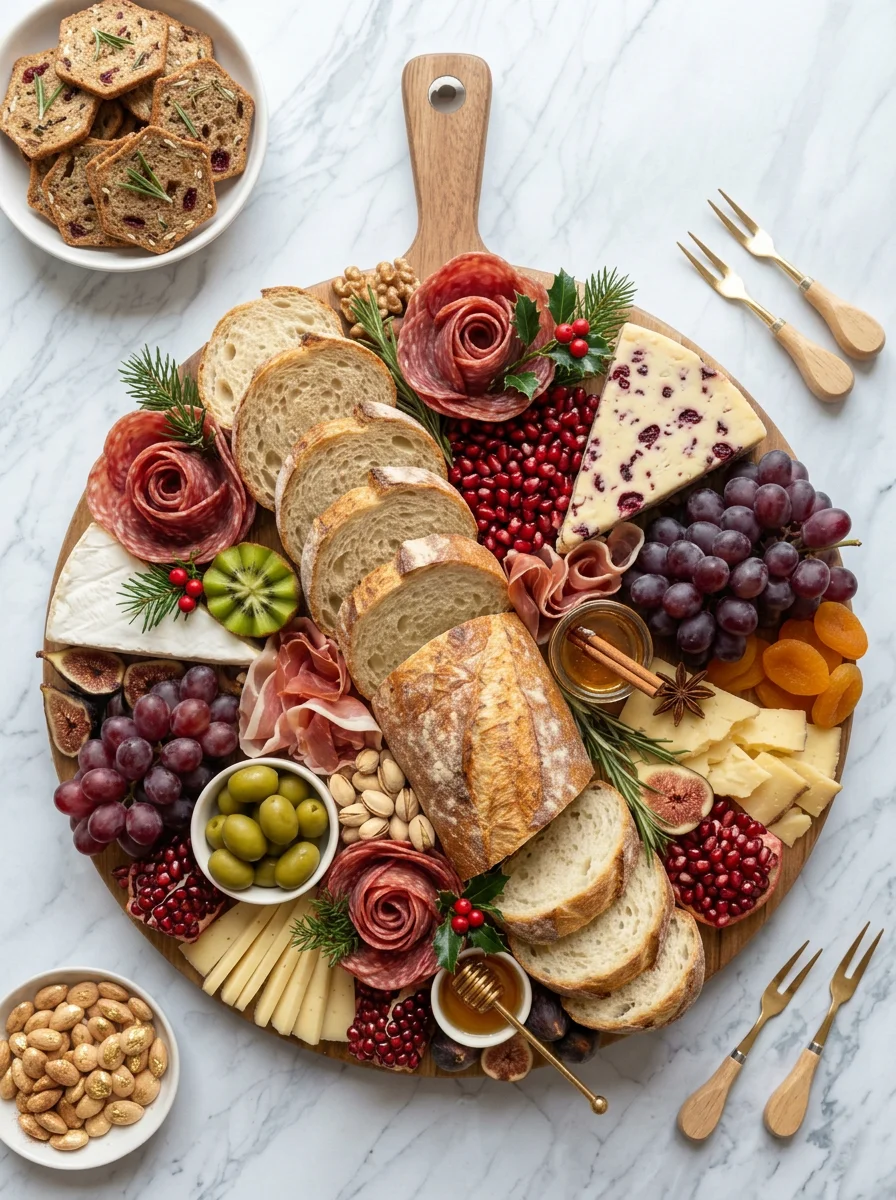
Selecting Your Foundation: Boards and Serveware
The surface you choose for your grazing spread sets the structural and visual foundation for the entire display. To align with an organic modern home style, lean into natural, tactile materials that bring warmth and raw beauty to your dining room or kitchen island.
Live-Edge Wood Boards: An extra-large, raw-edge oak, walnut, or acacia wood board provides incredible organic texture. The natural grain of dark wood offers a striking, warm contrast against pale cheeses and marble bowls.
Marble Slabs: A heavy white or grey-veined marble board adds cool elegance and stays naturally chilled, which helps preserve soft cheeses and delicate cured meats throughout a long party.
Vintage Metal or Slate Trays: Tarnished silver trays, antique brass platters, or dark slate boards bring depth and history to the table, creating a moody, atmospheric backdrop for winter hosting.
In addition to the main board, gather a few small ramekins or pinch bowls. Matte ceramic, carved wood, or small brass vessels work beautifully for holding honey, jams, olives, and mustard without letting liquids seep into adjacent crackers or nuts.
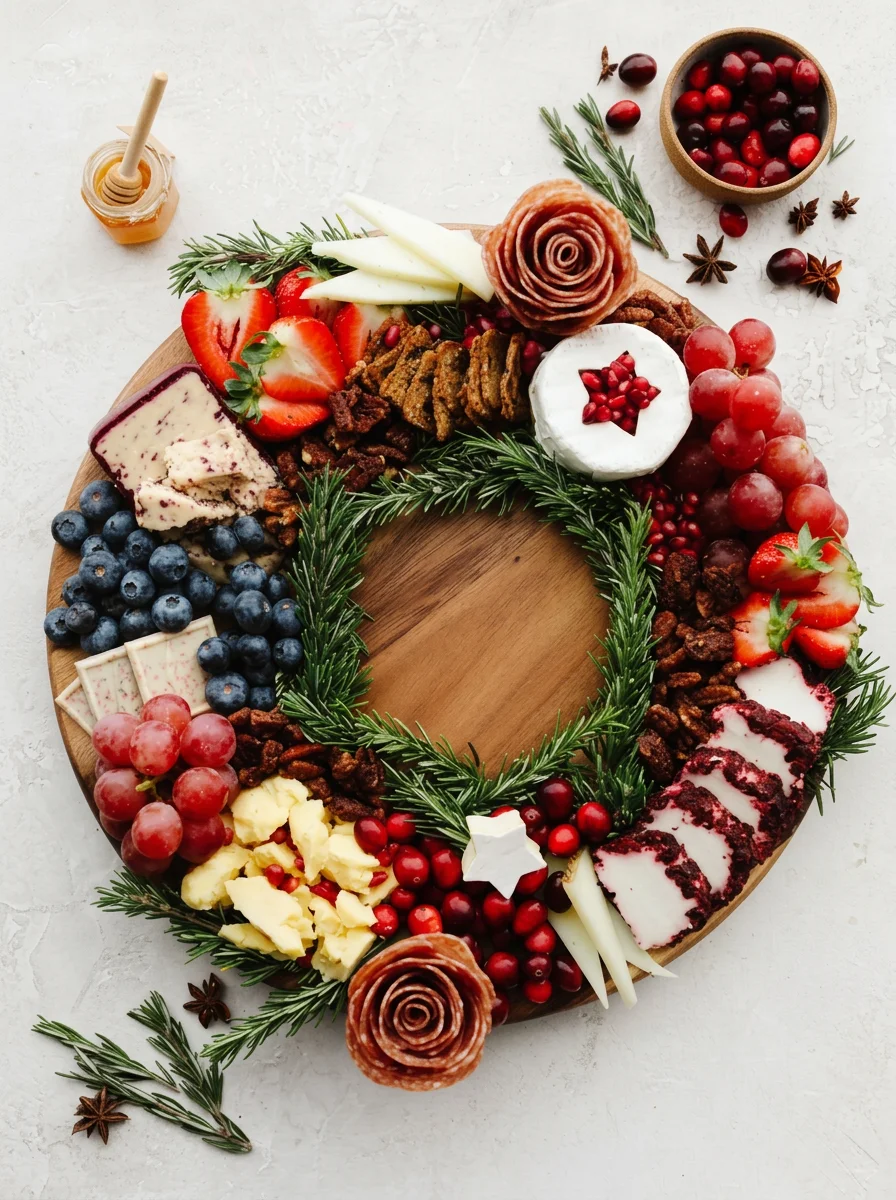
Curating Your Winter Ingredients
Before assembling, gather ingredients that represent a wide variety of textures, aging processes, and flavor profiles. Aim to purchase high-quality items from a local cheese shop, specialty grocer, or farmers market whenever possible.
1. The Cheese Selection
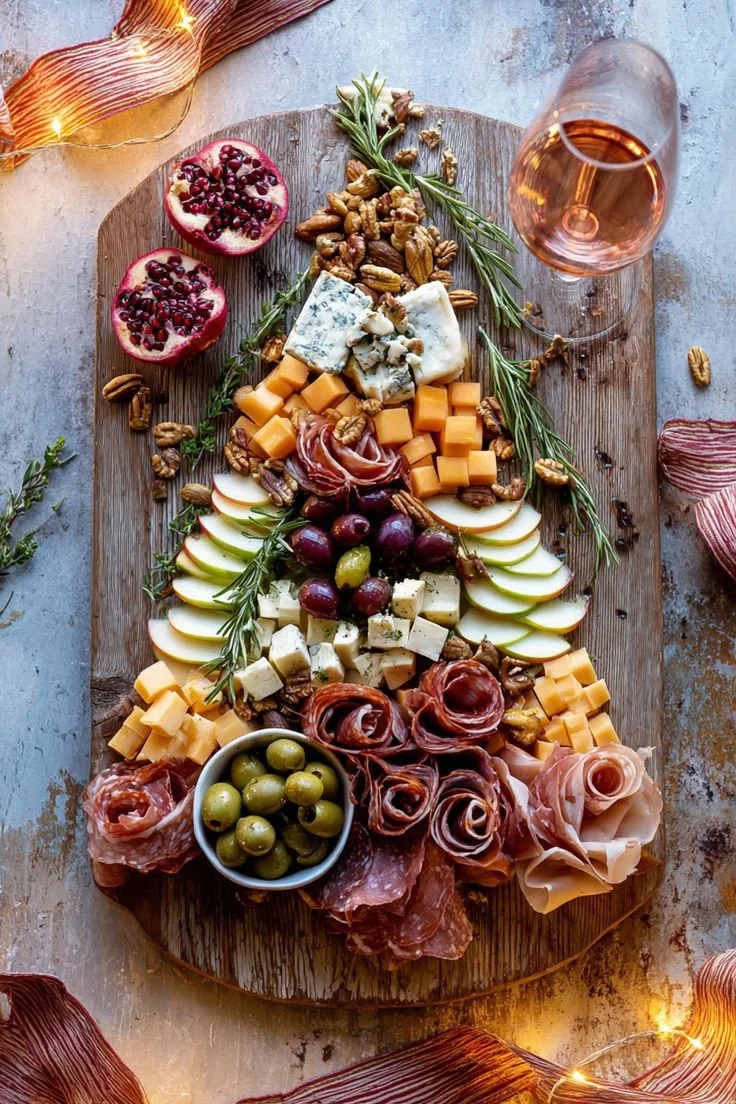
Offer three to five distinct cheeses, varying the milk types (cow, goat, sheep) and textures (soft, semi-soft, hard, blue).
The Soft Creamy Anchor: A wheel of rich, triple-cream Brie, Mt. Tam, or Camembert. For a winter twist, score the top crust and drizzle it with warm truffle honey or warm fig jam.
The Aged Hard Cheese: An aged Gouda with crystalline crunches, a sharp clothbound Cheddar, or a aged Manchego. Slice hard cheeses into geometric triangles or break them into rustic, uneven chunks with a cheese knife.
The Piquant or Blue Cheese: A wedge of creamy Roquefort, Gorgonzola Dolce, or Stilton brings an intense, savory depth that pairs exquisitely with sweet winter fruits and sweet dessert wines.
The Herb-Crusted Fresh Cheese: A log of fresh goat cheese rolled in cracked black pepper, chopped fresh rosemary, or crushed freeze-dried cranberries adds immediate color and freshness.
2. The Artisanal Cured Meats
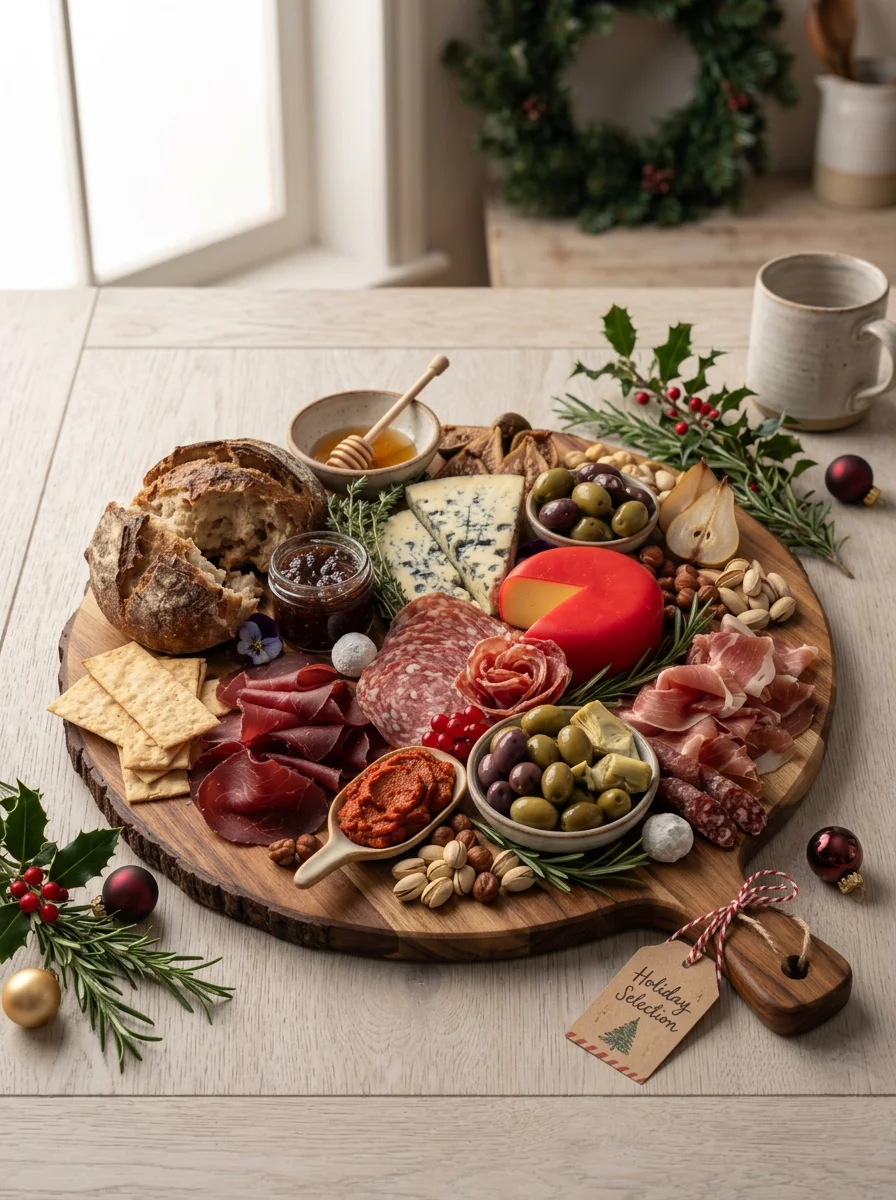
Folded and layered meats create volume, movement, and rich color on the board. Choose two to three varieties with different spice profiles and curing methods.
Prosciutto di Parma: Paper-thin, silky, and mildly sweet. Ribbon it loosely rather than laying it flat.
Salami Varieties: Finocchiona (fennel salami), Genoa salami, or a spicy Calabrian Soppressata. Salami can be folded into delicate ribbons or layered in undulating "rivers" across the board.
Bresaola or Capocollo: Lean, air-dried salted beef like bresaola offers a deep, moody dark-red color that fits the winter palette perfectly.
✦ THE ELEVATED HOSTING EDIT
Pair your winter grazing spread with a seamless entertaining strategy. Read our complete guide: The Ultimate Holiday Hosting Prep Checklist—covering everything from guest room amenities and lighting scenes to a 7-day dinner party timeline.
3. The Candied Nuts and Textural Crunch
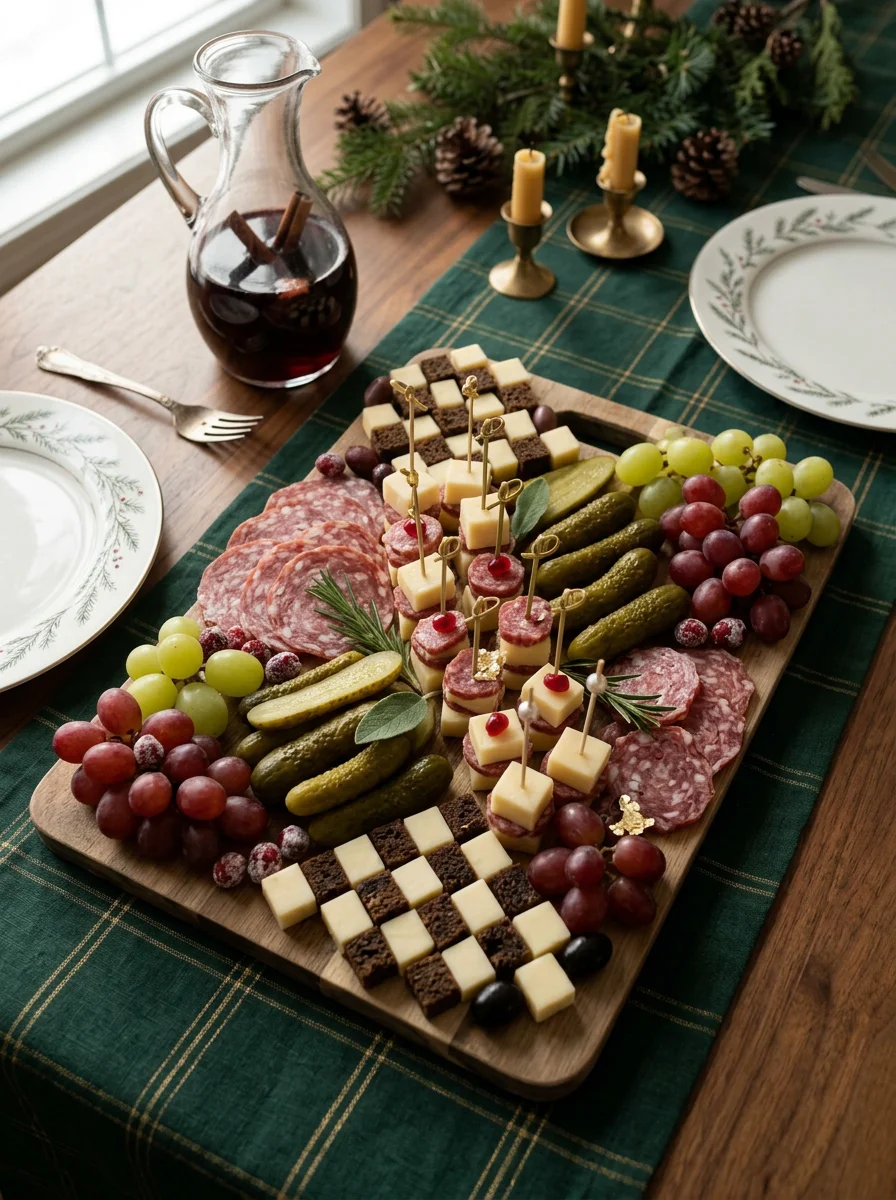
Crunch is essential for balancing soft cheeses and tender meats. Candied nuts offer both a satisfying crunch and a touch of warm, festive sweetness.
House-Candied Pecans: Tossed in egg white, brown sugar, cinnamon, cayenne pepper, and sea salt, then roasted until fragrant.
Rosemary Marcona Almonds: Spanish Marcona almonds sautéed in olive oil, sea salt, and finely chopped fresh rosemary.
Artisanal Crackers and Breads: Offer a mix of neutral sea salt crackers, dark rye crisps, seeded flatbreads, and thin slices of toasted sourdough baguette.
4. Winter Fruits and Preserves
Fresh and dried fruits provide acidity, cutting through the richness of the dairy and fats.
Fresh Produce: Sliced persimmons, ruby-red pomegranate broken into rustic clusters, dark black grapes, sliced Bosc pears, and fresh dark figs.
Dried Fruits: Dried Turkish figs, dried apricots, and tart dried cherries.
Spreads: Raw wildflower honeycomb, dark fig and walnut spread, or a spiced plum conserve.
Step-by-Step Assembly Guide
Building a charcuterie board is a process of layering from largest to smallest. Follow this step-by-step sequence to ensure your board looks balanced, natural, and visually captivating.
Step 1: Anchor with Bowls and Large Cheeses
Place your small ceramic or wooden ramekins filled with jams, honey, or mustard on the board first. Space them out asymmetrical to create balance. Next, place your main cheese anchors—such as a whole wheel of Brie or a large wedge of aged Gouda—near the bowls. Keep the cheeses separated so guests can easily carve into them from different angles.
Step 2: Arrange the Cured Meats
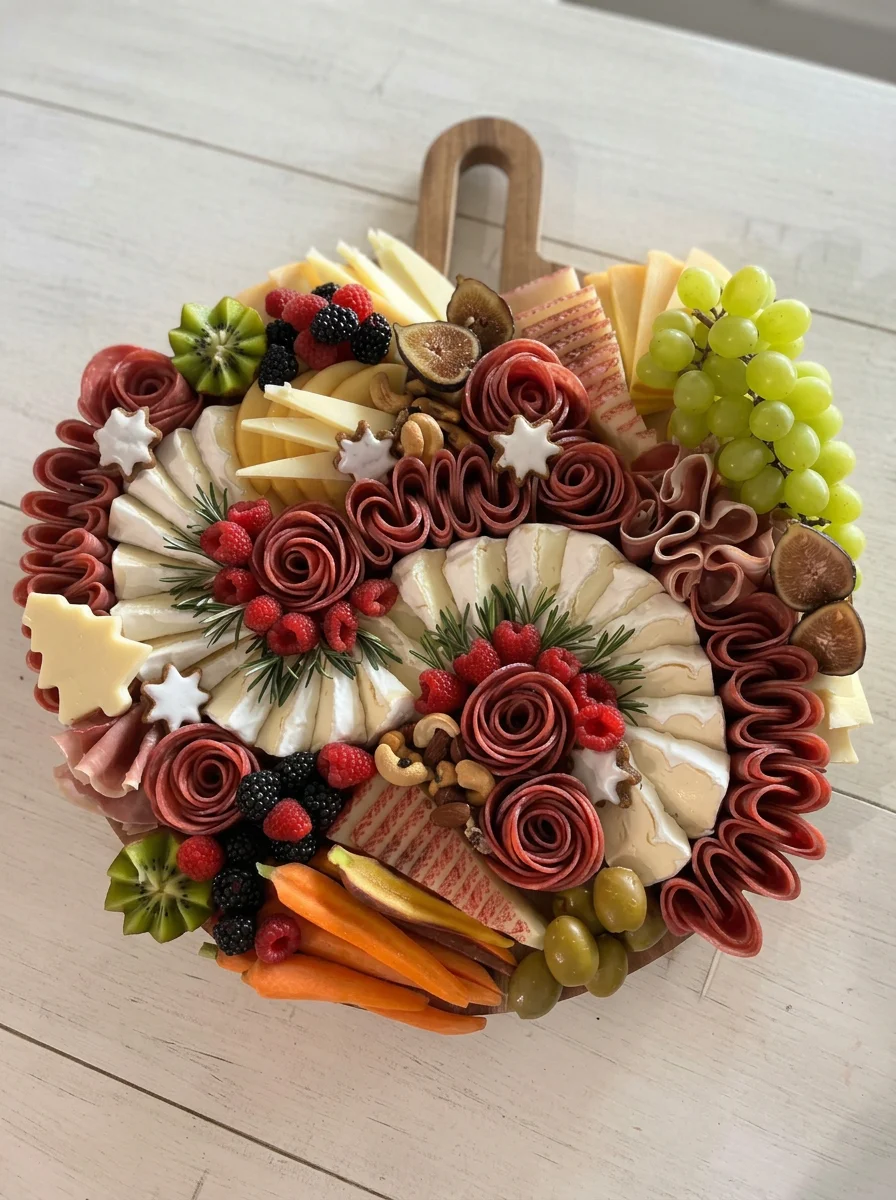
Create movement on the board using your meats. Rather than laying slices in flat, rigid rows, shape them thoughtfully.
Prosciutto Ribbons: Gently fluff and fold prosciutto slices into soft, airy mounds that resemble delicate fabric.
Salami Rivers: Fold salami slices in half and then in half again to form small triangles. Nestle them tightly together in a sweeping, curved line that winds between the cheese anchors and small bowls.
Step 3: Add Starchy Anchors and Crackers
Place your crackers, flatbreads, and baguette slices along the edges of the board, curving them around the meat and cheese structures. Grouping similar crackers together in overlapping fans looks far more editorial than mixing different types together randomly.
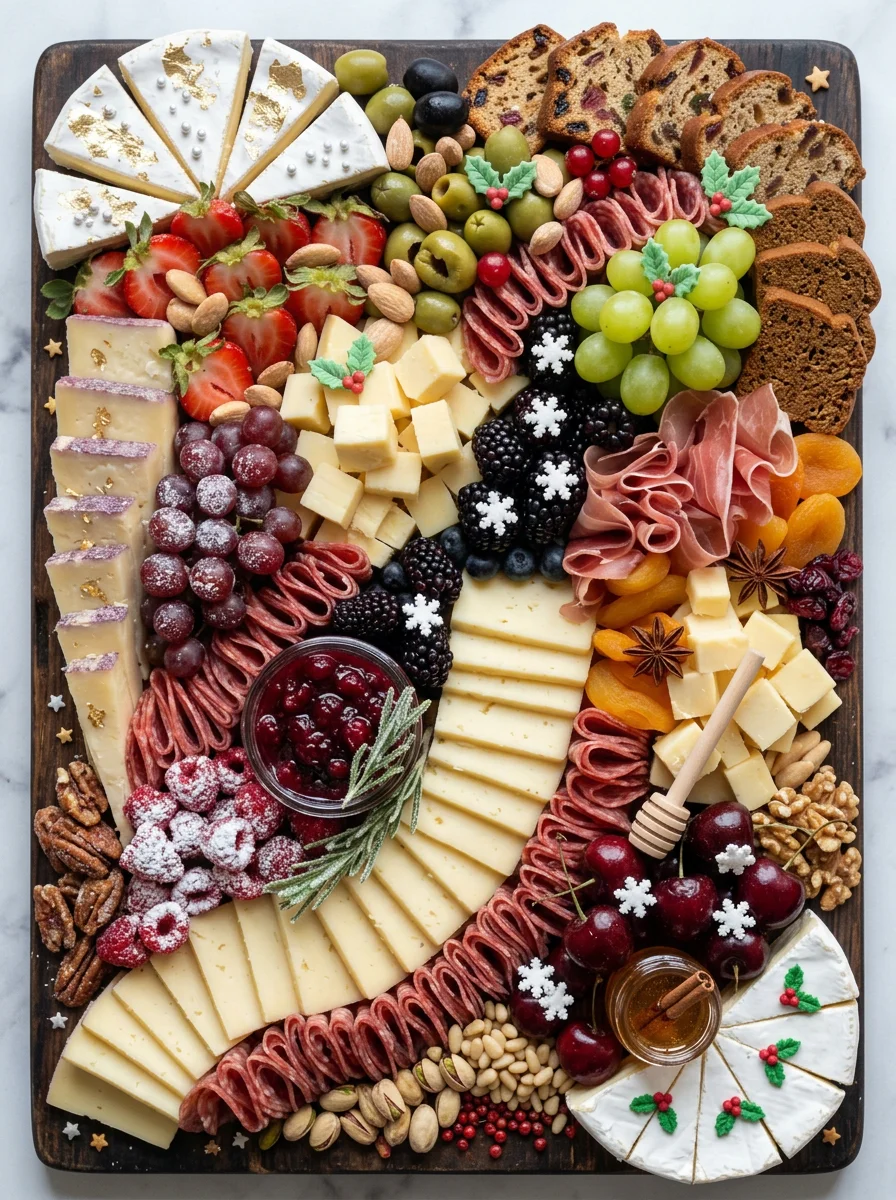
Step 4: Fill the Gaps with Fruits and Candied Nuts
At this stage, you will have small open pockets of space across the board. Fill these areas generously.
Place clusters of dark grapes or sliced persimmons near the hard cheeses.
Scatter your candied pecans and rosemary Marcona almonds into the remaining open spaces, letting them spill naturally around the bases of the cheese wedges.
Tightly pack dried figs and apricots into tiny gaps to ensure the board looks lush and fully abundant with no bare wood peeking through.
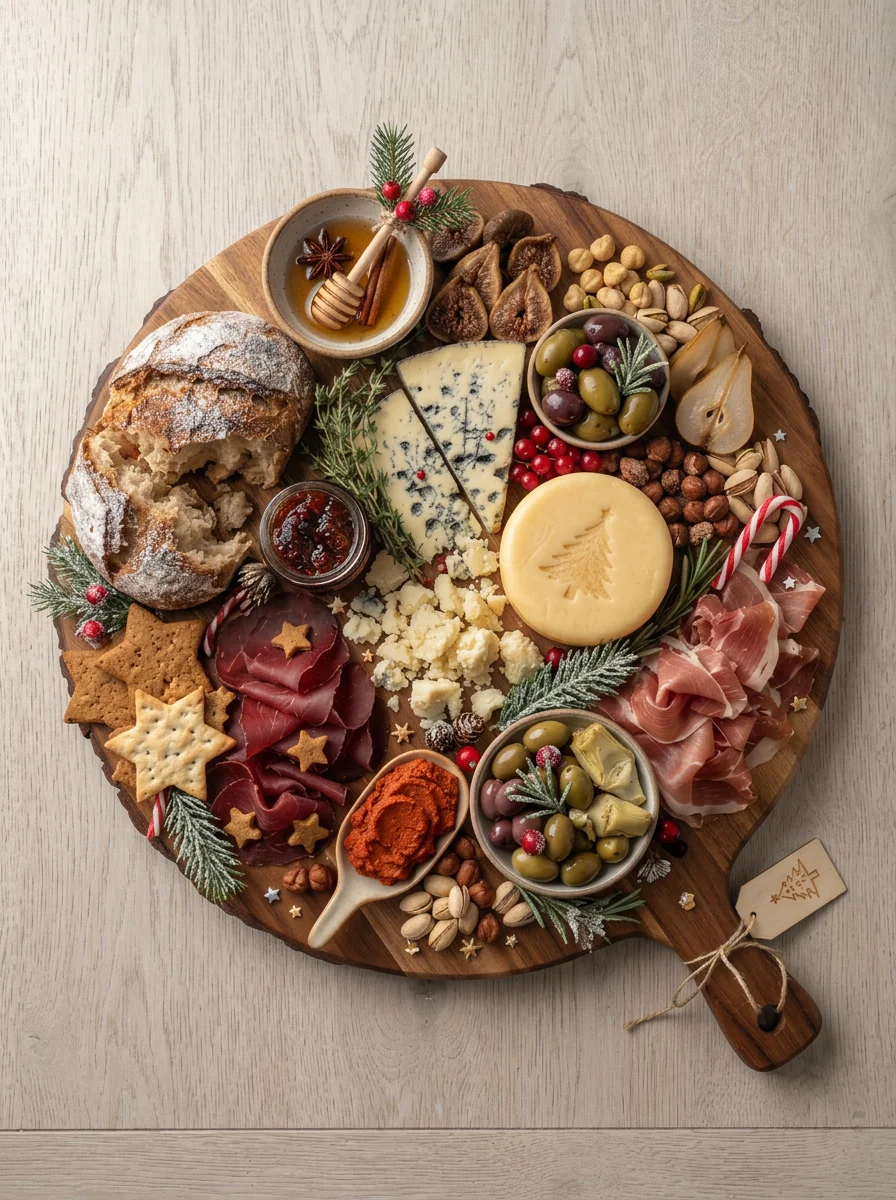
Step 5: Add Winter Botanicals and Final Garnishes
The final touch transforms a great board into an extraordinary winter showcase. Tuck fresh, organic garnishes around the edges and over the cheeses.
Fresh Herbs: Tuck sprigs of fresh rosemary, winter thyme, and sage leaves into open corners. The woody fragrance elevates the entire sensory experience.
Whole Spices and Dried Touches: Scatter a few whole star anise pods, cinnamon sticks, or dehydrated blood orange wheels over the board for a rustic, forged look.
Pomegranate Arils: Sprinkle bright, ruby-like pomegranate seeds directly over the soft goat cheese or Brie wheel for a pop of seasonal color.

Host Tips for Serving and Presentation
To ensure your holiday grazing board is enjoyed to its fullest, keep these practical hosting guidelines in mind:
Serve Cheeses at Room Temperature: Remove your cheeses from the refrigerator roughly 45 to 60 minutes before guests arrive. Cold cheese loses its subtle flavor nuances and creamy texture.
Provide Dedicated Utensils: Place a separate small knife or spreader with each cheese, a tiny spoon in every jam bowl, and small brass tongs near the meats so guests can serve themselves easily without mess.
Replenish with Intention: Keep extra sliced bread, crackers, and pre-cut meat in the kitchen. As the evening progresses, simply top off the depleted sections of the board rather than building a brand new one from scratch.
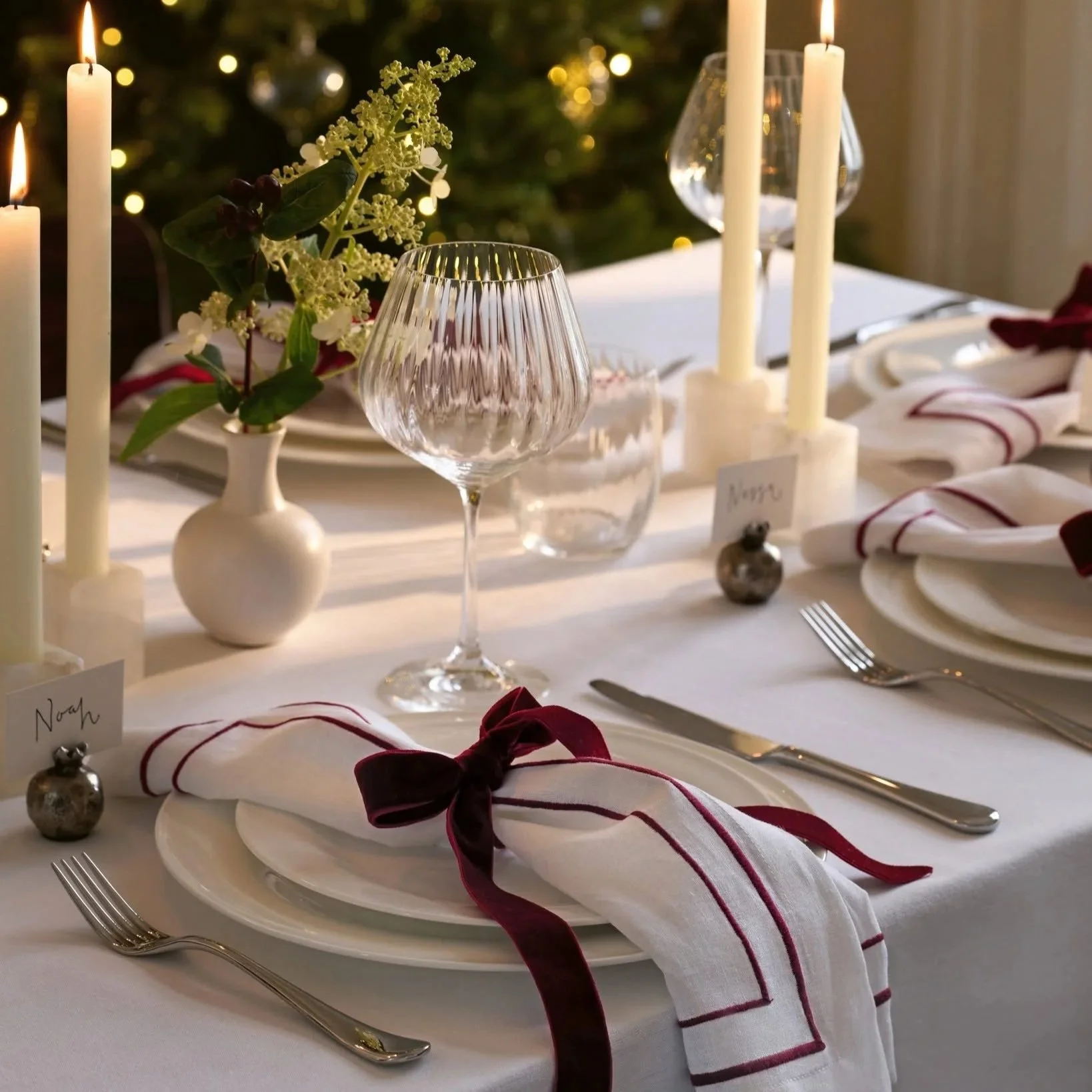
Lighting and Atmosphere: Place your finished board on a table illuminated by the low, warm glow of nearby taper candles. The warm candlelight reflecting off rich honeycomb, polished marble, and aged wood creates an unforgettable holiday welcome.
By focusing on high-quality ingredients, seasonal winter tones, and an intentional, layered assembly, your holiday charcuterie board will become the centerpiece of your fall and winter entertaining—inviting every guest to slow down, savor the details, and celebrate the season together.
You May Also Like: