The Rosie Home Edit contains affiliate links. If you make a purchase through these links, we may receive a commission. Thank you for supporting the work we do to curate this space.

There is a subtle shift that happens in the natural world as summer fades into fall. The vibrant, saturated greens of the landscape quiet down into a rich, grounding palette of amber, ochre, russet, and deep charcoal. The earth naturally sheds its excess, leaving behind beautifully weathered silhouettes, textured seed pods, and sculptural, bare branches.
For many years, traditional fall home decor relied heavily on synthetic materials—think bright orange polyester leaf garlands, glossy plastic pumpkins, and highly artificial scented candles. While these items certainly scream "fall," they often introduce a harsh, disjointed energy to a thoughtfully designed, modern interior.
What if, instead of buying mass-produced seasonal replicas, we looked to the outdoors for our design inspiration?
Styling your home with foraged branches and dried florals is the ultimate shortcut to achieving an authentic, high-end, organic modern aesthetic. It allows you to invite the raw, changing beauty of the changing seasons directly into your living spaces.
By utilizing wild, gathered elements, no two arrangements will ever look identical. Your home naturally inherits a deeply soulful, layered, and artistic atmosphere. Let us dive into the ultimate comprehensive design playbook on seven sophisticated ways to style foraged branches and dried botanicals for an organic fall look.

The Philosophy of the "Slow & Collected" Interior
The primary reason why store-bought seasonal decor often falls flat in high-end spaces is a lack of texture and history. A plastic leaf has no variance; every piece is stamped out of the exact same mold, offering no visual depth.
When you decorate with real, weathered elements—like a beautifully twisted oak branch covered in lichen, or a bundle of papery, sun-dried hydrangeas—you are bringing genuine architectural form into your home.
The goal of organic styling is not to create a perfectly symmetrical, stiff floral arrangement. Instead, we want to celebrate the imperfect, asymmetric, and wild nature of the outdoors.
By choosing the right vessels, playing with dramatic scale, and mixing contrasting textures, your autumn decor shifts from a literal themed display into a beautifully curated interior design feature.
SHOP THE EDIT


1. The Power of the Single, Giant Hero Branch
One of the most common mistakes homeowners make when trying to bring branches indoors is cutting them too small. A collection of tiny, short twigs placed in a small vase on a coffee table can easily look accidental or messy.
To create a true design moment, you need to lean heavily into dramatic scale. Seek out a single, large architectural branch that measures at least three to four feet in height. Look for wild branches with interesting, dramatic bends, unique offshoots, or dried seed pods still attached—such as oak, sweetgum, or wild pear branches.
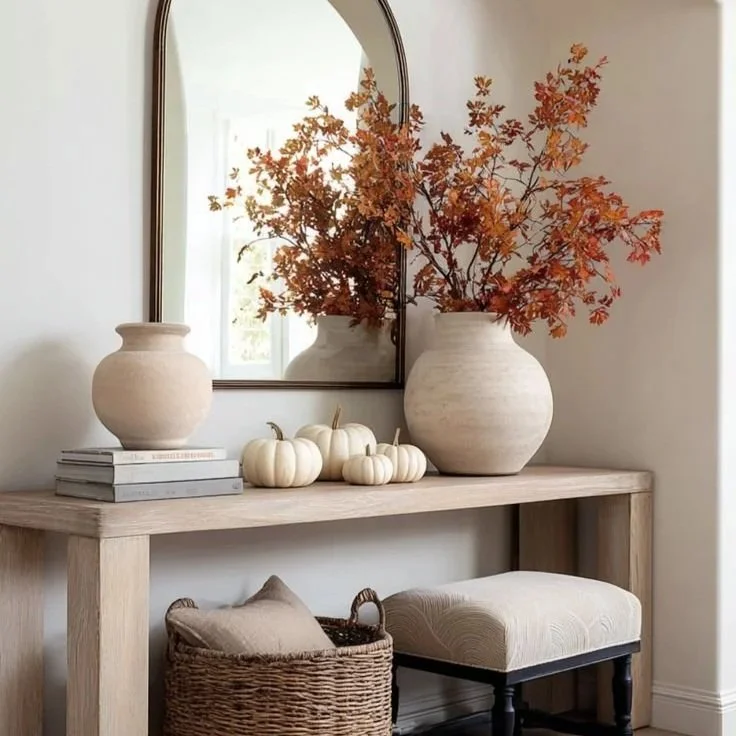
Drop this single hero branch into a heavy, substantial ceramic crok or an oversized terracotta urn. Place it in a high-visibility area, such as the center of your kitchen island, a grand entryway console table, or a deep living room corner. The sheer scale of the branch draws the eye upward, instantly accentuating the height of your ceilings and creating a breathtaking, minimalist focal point that feels completely intentional.

2. The Textural Asymmetry of Dried Hydrangeas
Hydrangeas are one of the absolute best florals to bridge the gap between late summer and deep fall. If you leave them on the bush until the end of August, they naturally dry out right on the stem, transitioning from soft pinks and blues into a gorgeous, muted palette of antique dusty rose, sage green, and warm sepia.
To style dried hydrangeas without making them look dated or dusty, avoid creating a tight, round dome arrangement. Instead, practice asymmetrical clustering. Choose an opaque stoneware vase with a narrow neck. Group three to five large hydrangea heads tightly at the rim of the vase to create a heavy base of rich texture.
Then, allow a few longer, bare woody stems to shoot out wildly from one side of the arrangement. This unexpected contrast between the dense, clouds of dried petals and the sharp, clean lines of the bare wood creates a beautiful, modern composition.

3. The Minimalist "Ikebana" Style Console Vignette
If your personal style leans heavily toward crisp minimalism, you might feel hesitant to fill your home with massive bundles of dried foliage. This is where you can lean into the Japanese art of Ikebana—a styling philosophy centered on line, form, and intentional negative space.
The Rule of Negative Space: In minimalist design, the empty space surrounding a botanical element is just as important as the botanical itself. A single perfect stem allows the eye to appreciate the subtle geometry of nature.
To achieve this look, source a shallow ceramic frog bowl or a heavy pin-holder mechanism. Select just two or three exceptional, slender stems—such as a single dried lotus pod, a curved stem of wild grass, or a solitary branch of eucalyptus that has dried to a muted silvery-grey.
Secure them into the holder at differing heights and opposing angles, ensuring that the stems do not cross or clutter each other. Place this architectural vignette on a sleek entryway console next to a stack of linen-bound art books and a simple beeswax candle.
4. Layering the Earthy Tones of Dried Ornamental Grasses
As the fall wind picks up, the fields fill with rows of waving wild grasses. Gathering these grasses—like pampas, bunny tails, dried wheat, or miscanthus—is an incredible way to introduce soft, fluid movement to your interior surfaces.
When styling dried grasses, the secret to keeping them looking modern is keeping them monochromatic. Avoid mixing multiple different colors of grass in a single vase. Instead, choose one specific variety and gather a large, dense bundle of it.
Drop the collection into a matte, textured ceramic vase that matches the tone of the grass itself (such as a cream vase for bleached wheat, or a dark charcoal vase for smoky wild grass). This creates a stunning column of uniform texture that adds warmth and softness to hard kitchen counters or modern mantels without introducing visual noise.

5. The Low-Profile Earthy Tablescape
When designing a tablescape for an fall dinner party, large, towering floral centerpieces can block sightlines across the table, making conversation feel awkward and restricted. Instead, create a gorgeous, low-profile botanical crawl directly on the tabletop surface.
Start by laying down a wrinkled, organic linen table runner in a rich tone like olive or warm terracotta. Instead of using a traditional vase, place a collection of small, mismatched stoneware bud vases down the center of the runner. Tuck a single foraged element into each vase—a tiny sprig of dried oak leaves here, a singular seed pod there, and a few stems of dried bunny tails.
Fill the gaps between the vases with varying heights of solid beeswax taper candles and a handful of small, matte white baby boo pumpkins. When the candles are lit, the flickering flames cast beautiful, dancing shadows through the delicate dried textures, creating an incredibly intimate dining experience.
Have you ever sat down at a dinner table only to find yourself constantly ducking around a massive centerpiece just to talk to the person across from you? By keeping your fall elements low and spaced out, you effortlessly preserve the warmth of human connection.
6. The Textural Dried Floral Wreath
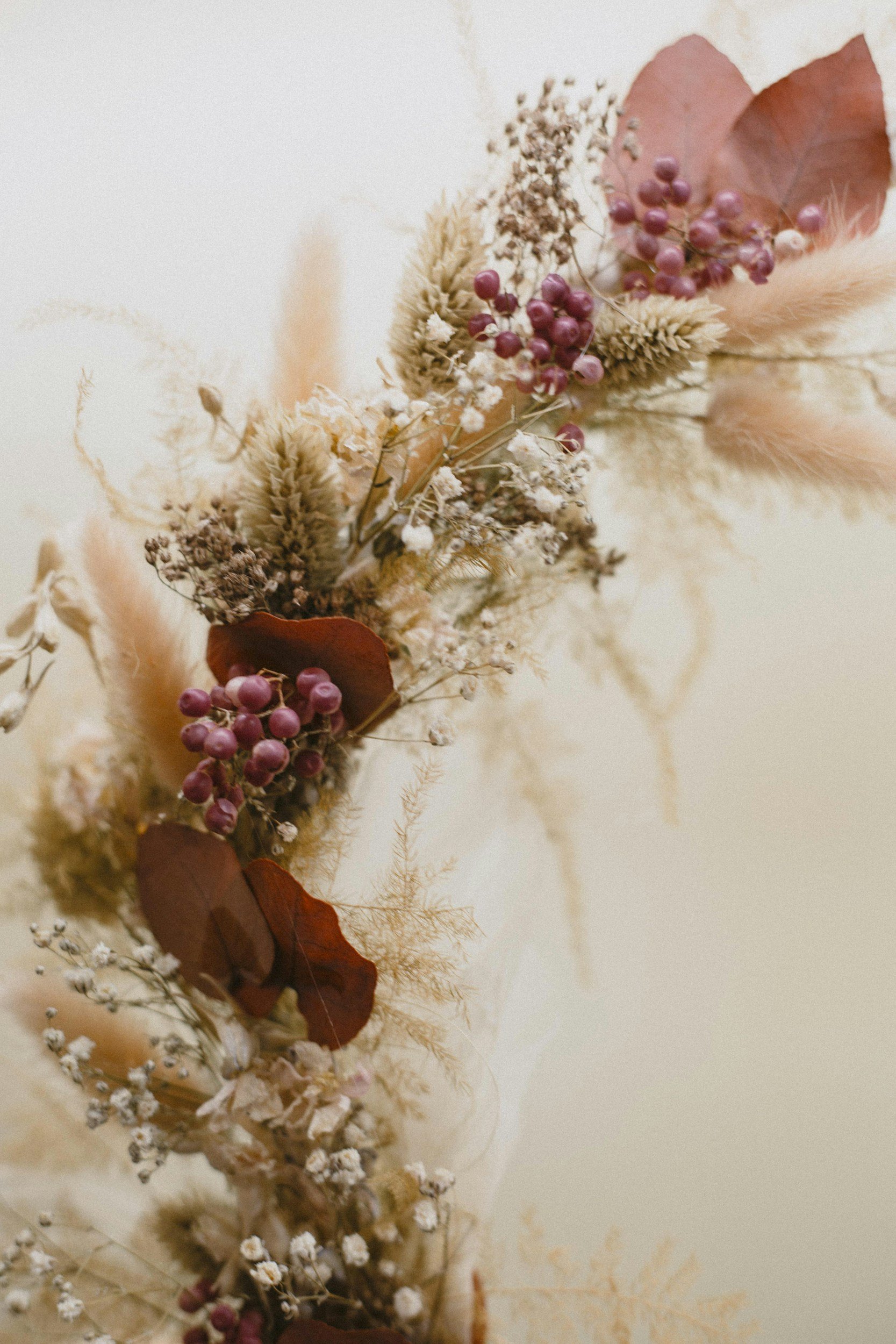
Wreaths are no longer reserved exclusively for the front door. A beautifully crafted, interior dried floral wreath functions as a stunning piece of dimensional wall art when hung above a living room mantel, in a cozy reading nook, or against a large dining room mirror.
Instead of building a dense, perfectly round wreath out of faux pinecones and plastic berries, source a minimalist grapevine or structural brass metal hoop. Use fine floral wire to attach a selection of textured, foraged elements to just one half of the hoop, leaving the other half completely exposed.
Layer the asymmetrical side with dried strawflowers, brown seed pods, dehydrated orange slices, and tufts of preserved moss. This modern, crescent-shaped layout feels deeply artistic, fresh, and grounded in nature.

7. The Cozy Bedroom Nightstand Vignette
Fall is the ultimate season of nesting, making it the perfect time to bring the calming, grounding energy of organic textures into your private sleeping spaces. A bedroom nightstand is a small, intimate surface, meaning it requires a highly curated approach.
Choose a small, antique glass amber bottle—the warm glass color perfectly mimics the amber glow of autumn light. Tuck just two or three delicate, airy stems of a dried botanical inside, such as dried baby’s breath (gypsophila) that has turned a rich cream tone, or a few stems of fragrant dried lavender.
Pair the bottle with a small ceramic tray to hold your evening jewelry, a soft linen journal, and a warm ceramic mug of tea. The subtle, earthy texture of the dried botanicals adds an instant layer of quiet comfort to your view right before you turn off the lights for the evening.

The Ultimate Fall Foraging & Prep Guide
To ensure your home projects are safe, long-lasting, and stunningly beautiful, follow this quick-reference preparation guide before you begin styling your gathered elements:
Woody Branches: Best found along wooded trails, during backyard trims, or on fallen tree paths. Trim the ends at a 45-degree angle and scrape back 1 inch of the bark to prevent quick splitting. Expected Lifespan: 2 to 3 months (dry).
Dried Hydrangeas: Gather from garden beds or older residential landscaping. For best results, hang them completely upside down in a dark, dry room for two weeks before styling. Expected Lifespan: Years (if kept entirely dry).
Wild Grasses: Best collected from open fields, roadsides, or marshy banks. Give the heads a generous coating of unscented hairspray immediately after gathering to prevent messy shedding. Expected Lifespan: Indefinite.
Seed Pods & Cones: Found scattered on pine forest floors, park grounds, and wild fields. Bake them on a parchment-lined tray at 200°F (93°C) for 30 minutes to eliminate any hidden bugs and dry out residual sap. Expected Lifespan: Indefinite.

Your Step-by-Step Fall Styling Workflow
Ready to transform your home with the beautiful textures of the outdoors this weekend? Follow this exact procedural sequence to execute your foraging and styling project with ease:
1.The Mindful Gathering Walk:
Head outside with a sharp pair of pruning shears and a sturdy canvas bag. Look for fallen branches with interesting curves, weathered seed pods, and grasses. Remember the golden rule: never take more than 10% from a single living plant.
2.The Pest & Moisture Purge:
Shake out all your branches outdoors to remove loose dirt and insects. For seed pods and pinecones, bake them at a low temperature to kill any hidden bugs. Spray wild grasses with hairspray to lock in their fluff.
3.Match Vessels to Scale:
Gather your interior styling vessels. Match large, heavy branches with massive stoneware urns, and delicate, singular stems with small glass amber bottles or ceramic Ikebana frogs.
4.Arrange and Compose:
Build your arrangements using the principles of asymmetry and negative space. Place your hero branch in the entry, layer your grasses in the kitchen, and set up your cozy bedroom vignettes.
5.Light and Protect Your Styling:
Position your new arrangements away from direct, harsh sunlight to prevent the organic colors from bleaching out too quickly. Light a warm, grounding beeswax candle nearby and enjoy the comforting, rustic soul of your transformed space.

How do you plan to bring the outdoors in this season—will you challenge yourself to find a massive, dramatic hero branch for your entryway, or do you prefer the quiet elegance of small, minimal bud vases scattered throughout your rooms?
Styling your home for fall with foraged branches and dried botanicals is a beautiful, slow design philosophy that encourages us to slow down and appreciate the quiet transformations of the natural world. It teaches us to find high-end luxury not in glossy, store-bought plastic items, but in the imperfect curves of an oak branch, the soft texture of wild grass, and the warm, earthy tones of a changing landscape.
By embracing dramatic scale, asymmetric groupings, and the artistic power of negative space, you can easily create a cozy, layered home sanctuary that honors the true, authentic soul of fall.
Bringing raw, organic elements indoors adds effortless height and texture, instantly accentuating the cozy elements of an organic modern living room without requiring expensive decor.
You May Also Like:
MORE FROM THE EDIT