The Rosie Home Edit contains affiliate links. If you make a purchase through these links, we may receive a commission. Thank you for supporting the work we do to curate this space.
Have you ever walked into a space that immediately made you exhale a deep, quiet sigh of relief? There is a subtle, grounded magic to a room that feels both meticulously designed and effortlessly lived-in. As the crisp air of fall shifts into the deep, quiet freeze of winter, our living rooms become the absolute heart of the home. It is the place where we gather with loved ones, curl up with a hot cup of tea, and seek solace from the cold world outside.
For years, minimalist interior design was often criticized for feeling stark, sterile, and cold. On the opposite end of the spectrum, traditional cozy decor often relied on heavy clutter, overwhelming patterns, and chaotic trinkets. Enter the organic modern aesthetic—the perfect, harmonious bridge between sleek contemporary minimalism and the raw, warming beauty of nature.
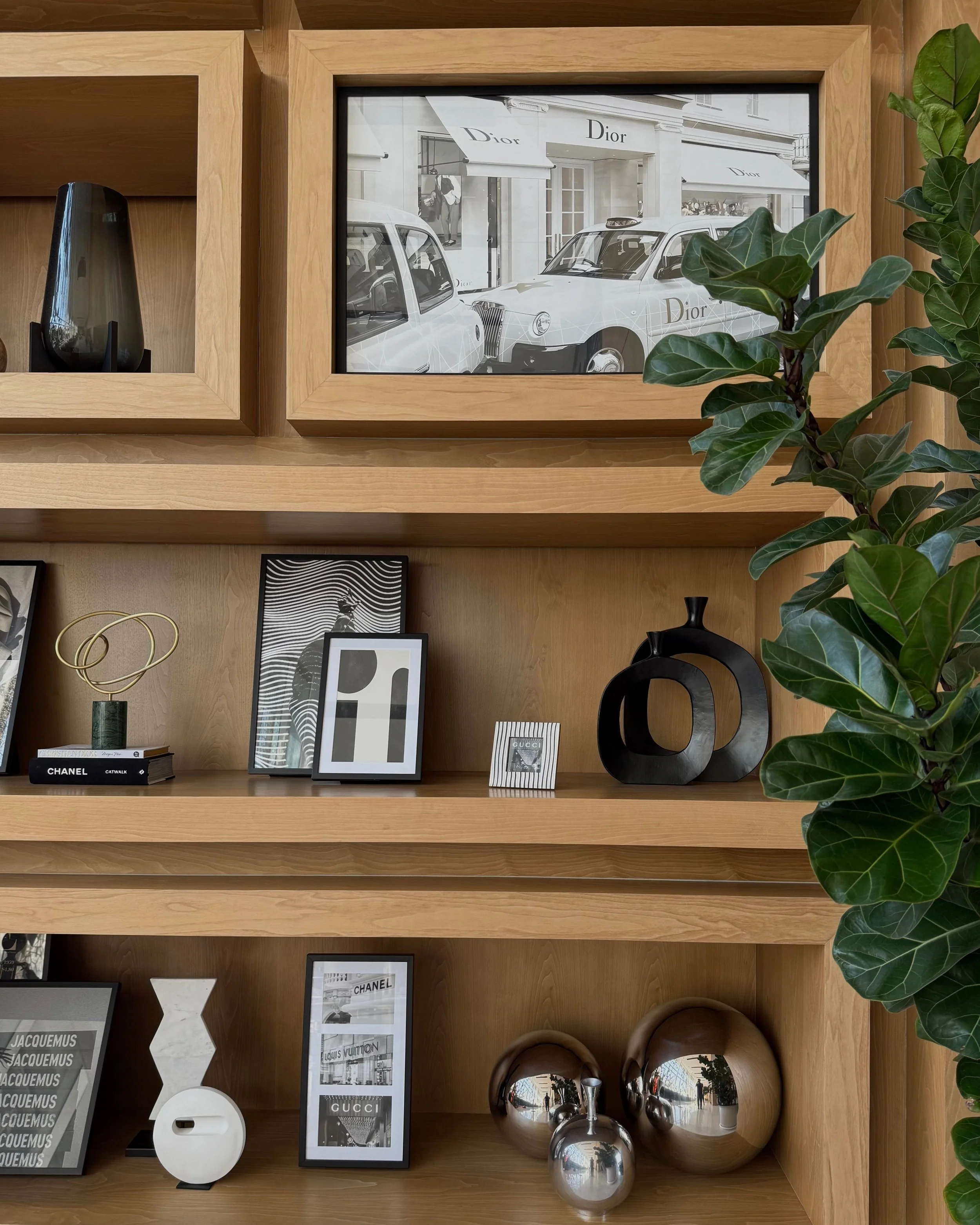
Organic modern style is not about filling your home with mass-produced decor; it is a philosophy of intentional living. It focuses on clean architectural lines, earthy neutral color palettes, rich natural textures, and handcrafted elements that bring the outdoors inside. During the winter months, this approach allows you to create a sanctuary that feels light, airy, and uncluttered, yet deeply warm, tactile, and comforting.
Are you ready to curate an inviting, elevated living space that embraces quiet luxury and natural warmth this cold-weather season?
Let us explore the five essential elements needed to design an organic modern living room that welcomes winter with effortless grace.
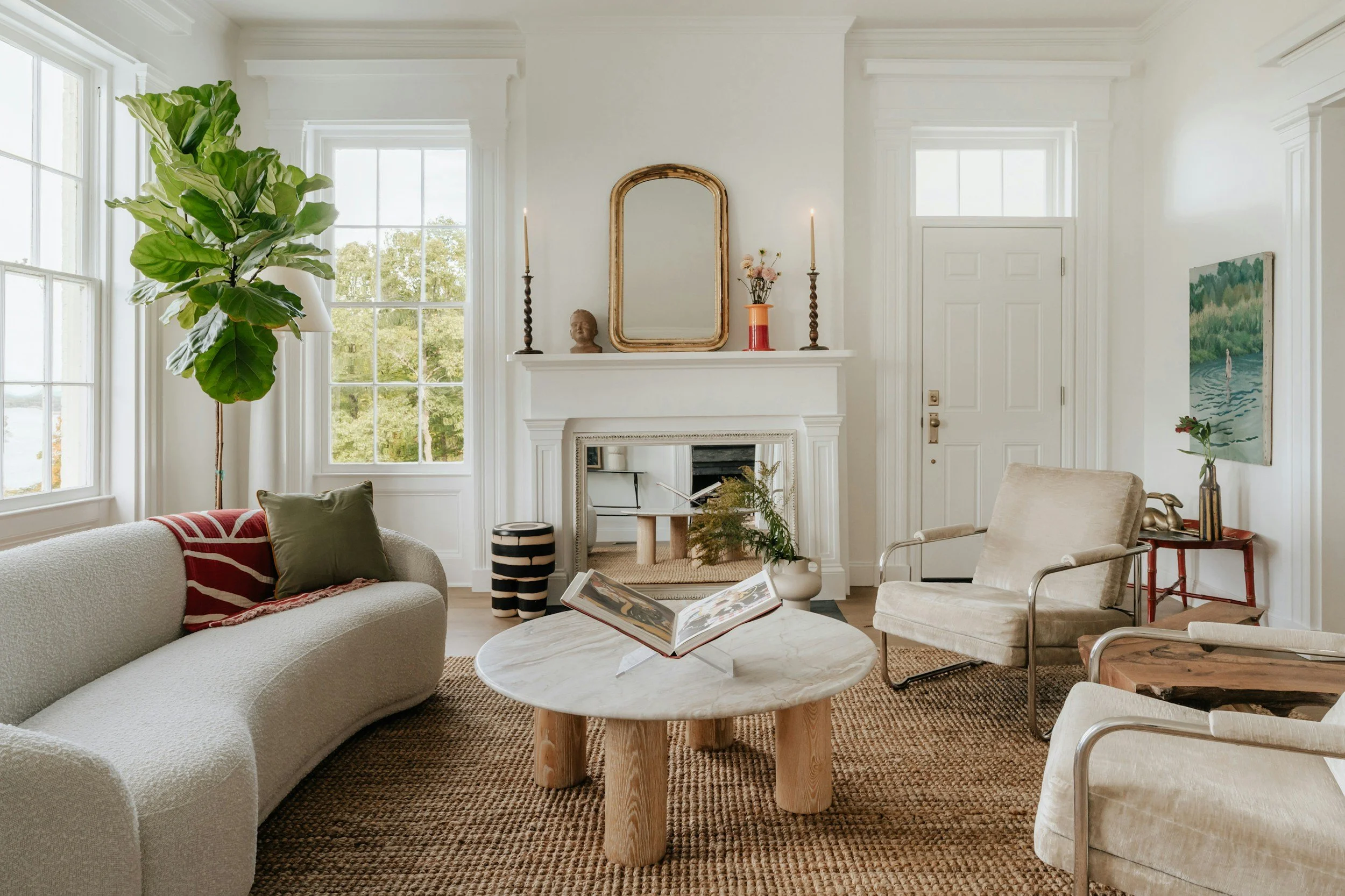
Element 1: The Foundation of Earthy, Muted Neutral Tones
When designing an organic modern space, color serves as the emotional foundation of the entire room. Traditional modern design often relies heavily on stark whites, high-contrast black, and cold cool-toned grays. Organic modern design, however, draws its color palette directly from the winter landscape—think soft alabaster, warm sand, muted taupe, mushroom gray, weathered stone, and deep terracotta.
Have you ever noticed how changing the undertones of your wall paint or main furniture can completely alter the temperature of a room?
To create a cozy winter environment, step away from clinical, blue-based whites and embrace warm, creamy neutrals with subtle beige or yellow undertones. These gentle shades absorb and reflect the soft, low sunlight of winter afternoons, creating a soothing, cocoon-like atmosphere.
Layering Tonal Depth
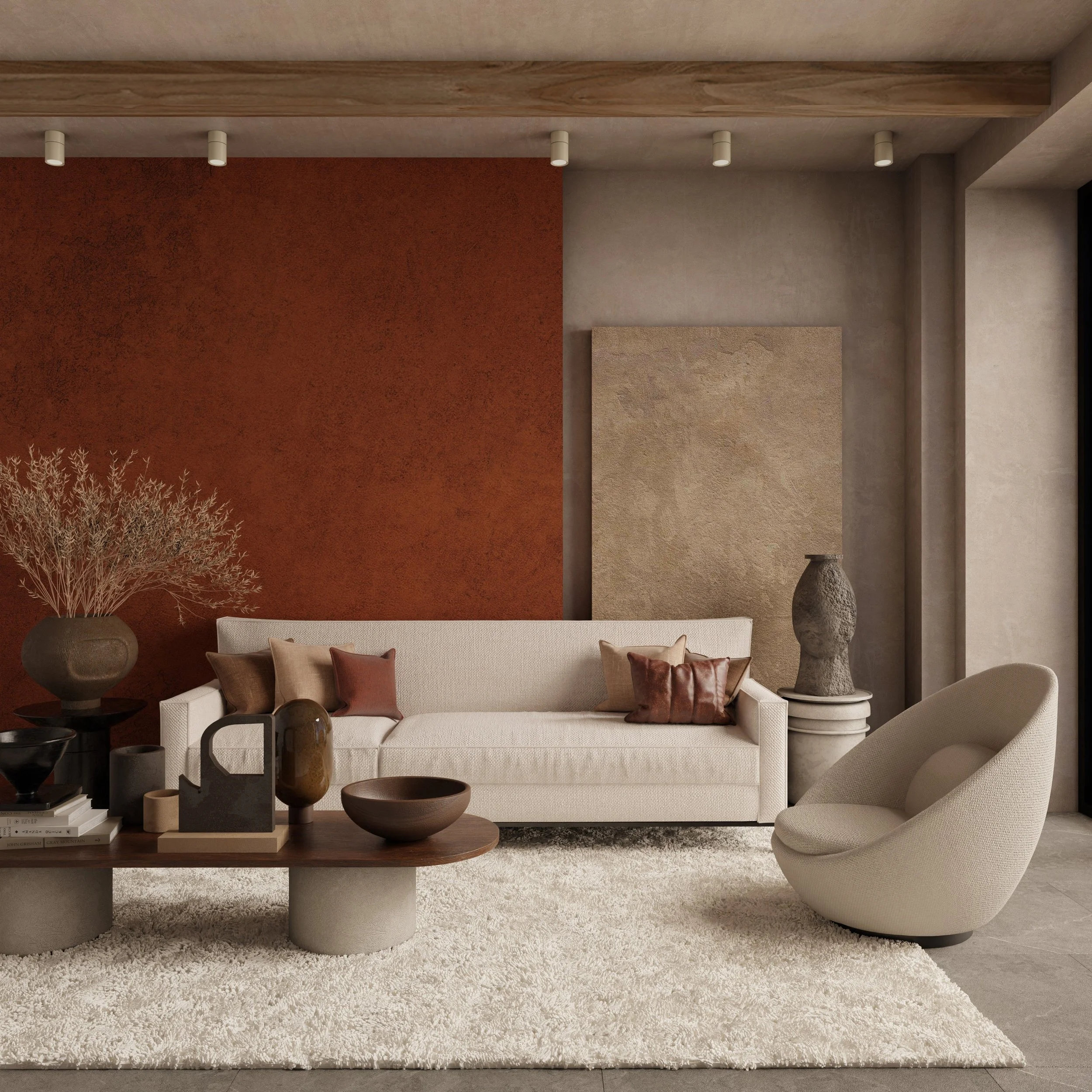
The secret to keeping a neutral color palette from feeling flat or uninspiring is tonal layering. Instead of matching every piece of furniture exactly, build a spectrum of complementary tones throughout the space.
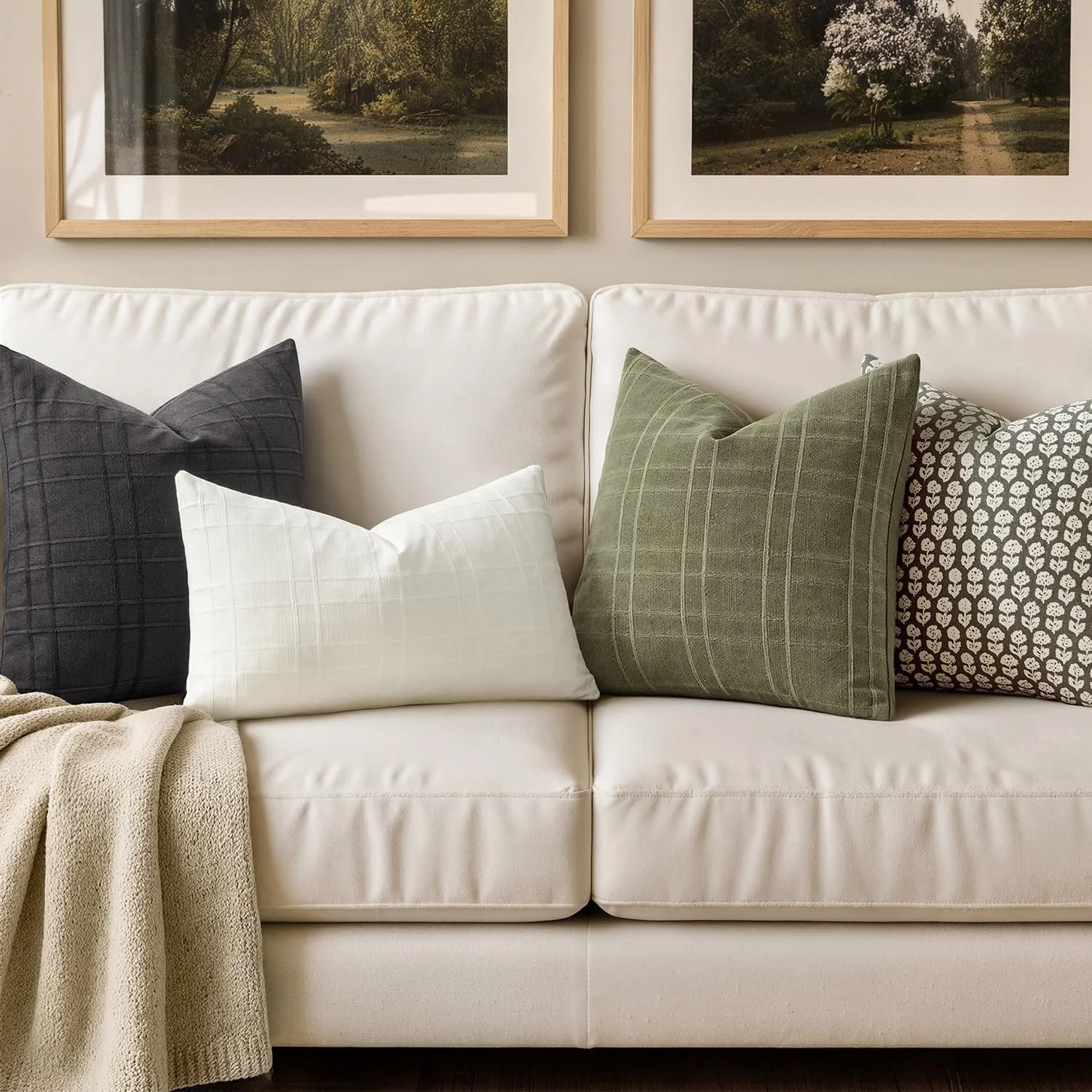
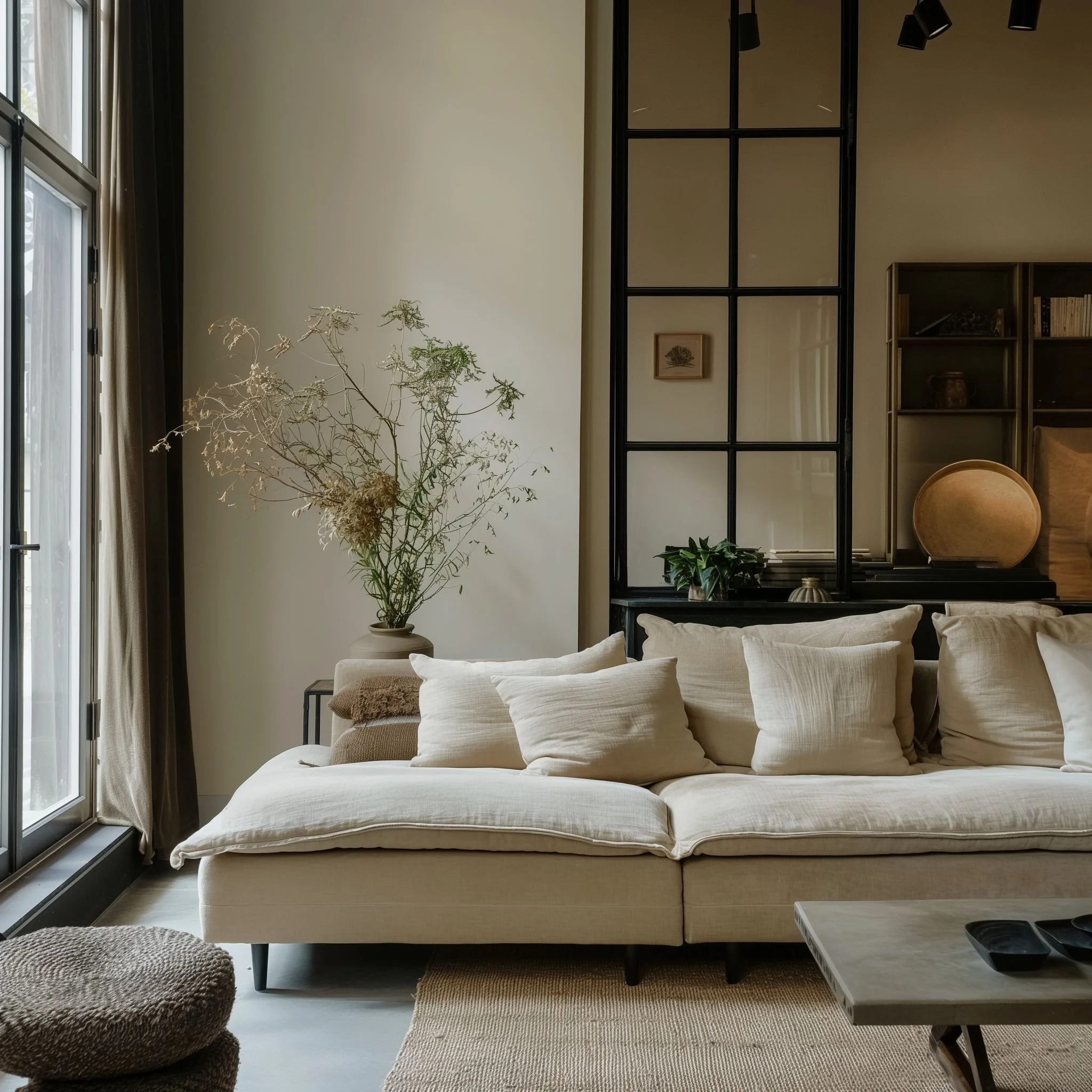
For example, pair a plush alabaster fabric sofa with warm taupe linen throw pillows, an oatmeal wool rug, and dark wood side tables. To add subtle grounding contrast without disrupting the serenity of the room, incorporate small accents of deep charcoal, washed olive, or dark espresso wood. This creates a rich, dimensional visual experience that feels calm, sophisticated, and deeply intentional.
SHOP THE EDIT


Element 2: Raw, Tactile Wood and Natural Stone Elements
At its core, organic modern interior design celebrates the beautiful imperfections found in nature. Integrating raw wood, tumbled stone, and unrefined minerals brings an undeniable sense of history, permanence, and warmth to a winter living room.
Why do natural materials evoke such a immediate sense of comfort during the cold-weather months?
Synthetic, plastic, or high-gloss materials feel cold to the touch and reflect light in an artificial way. Natural woods and stones, however, possess a matte texture, unique grain patterns, and physical warmth that grounds a living room in organic luxury.
Embracing Weathered Woods
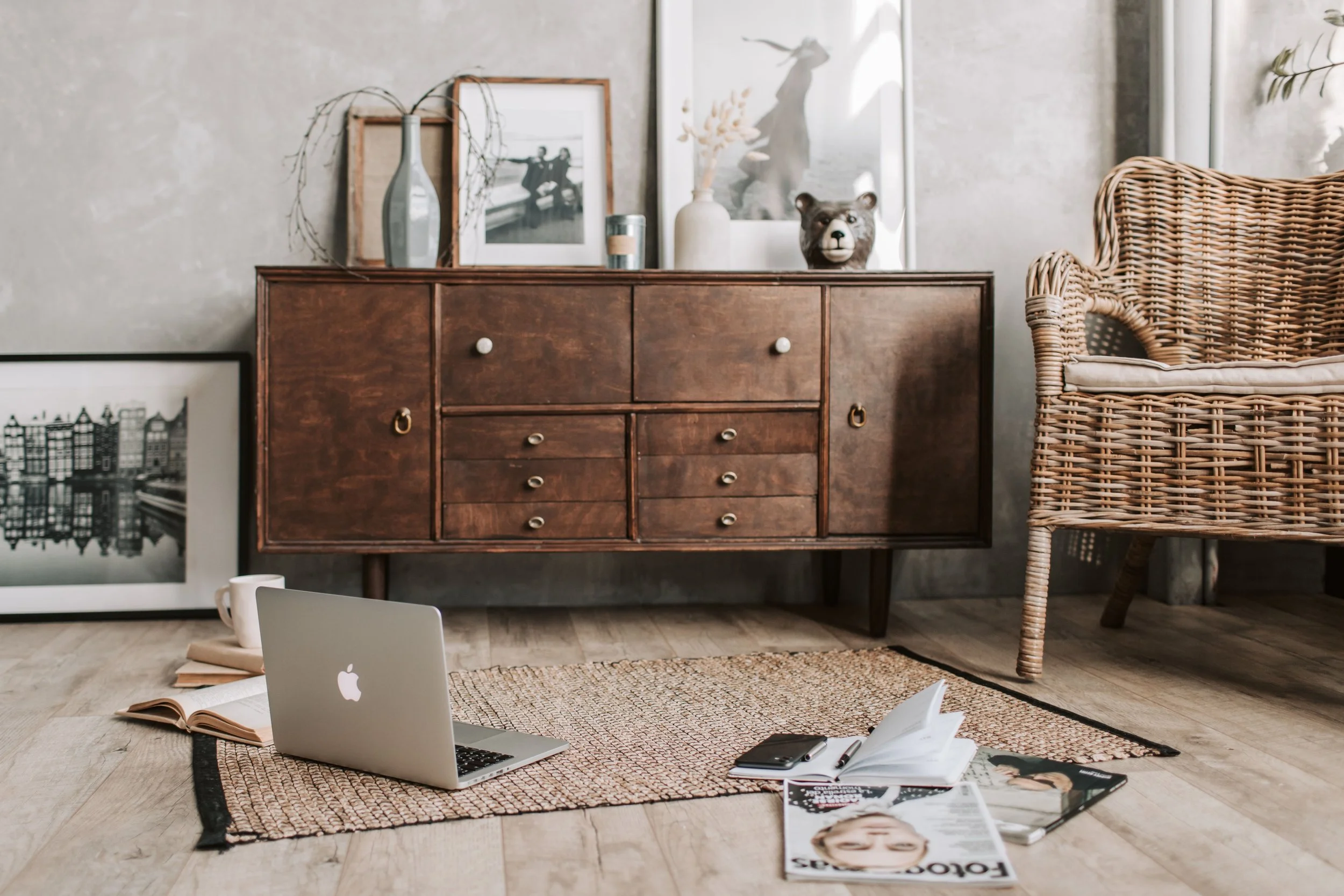
Incorporate furniture pieces crafted from solid oak, walnut, reclaimed wood, or teak. Look for designs that feature soft curves, live-edge details, or visible wood grain rather than heavy, glossy lacquers. A low-profile oak coffee table with a subtle wire-brushed finish serves as an exquisite centerpiece for an organic modern living room. The natural knots and grain variations tell a story, adding character and warmth to the space.
Incorporating Unrefined Stone
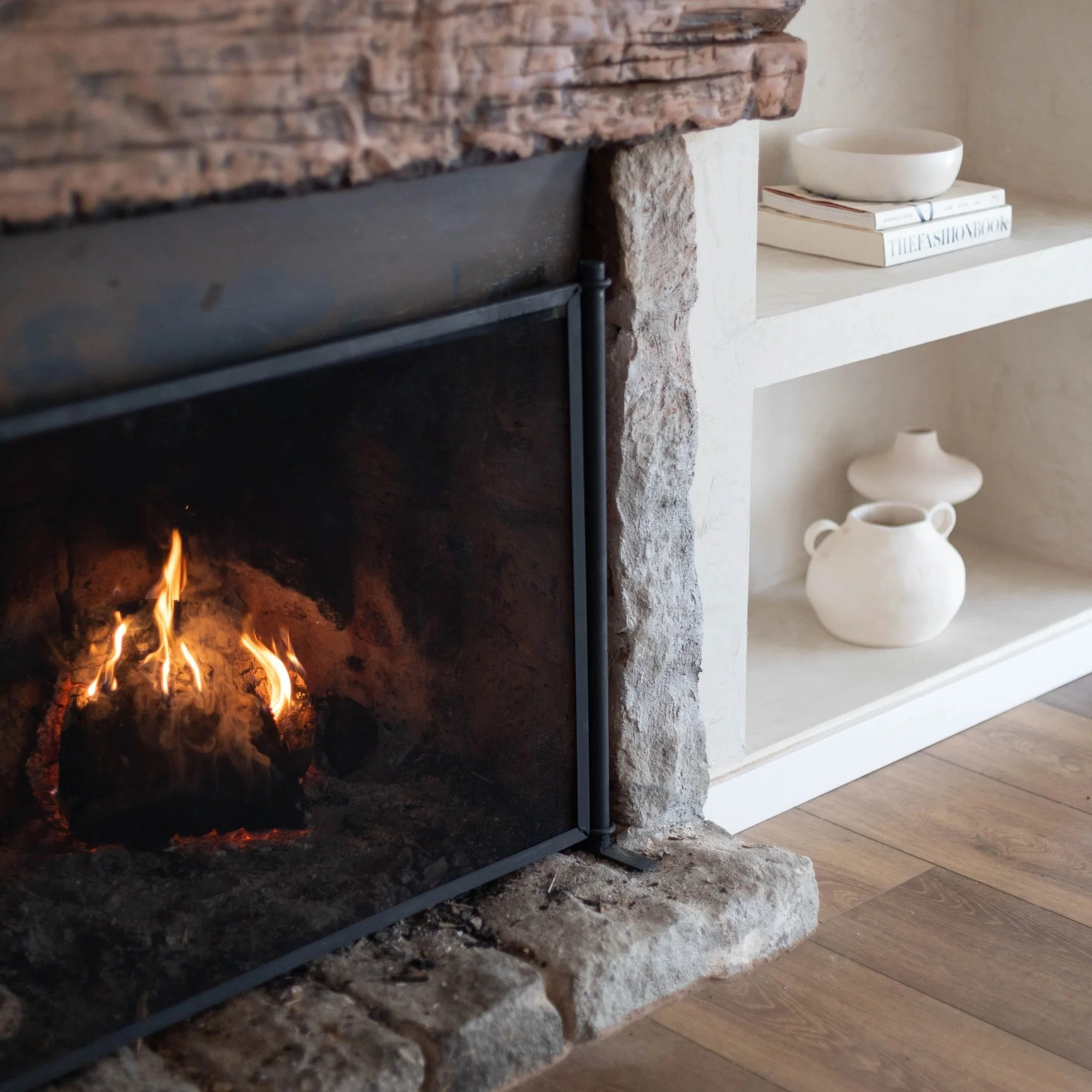
Pair warm wooden furniture with natural stone accents to balance the room’s textures. A travertine side table, a tumbled limestone bowl filled with winter moss, or a fireplace mantel clad in Roman clay or lime-wash finish introduces an Old-World architectural element. The juxtaposition of smooth wood against porous, matte stone is a hallmark of high-end organic modern design.
Element 3: Luxurious Layered Textiles for Winter Comfort
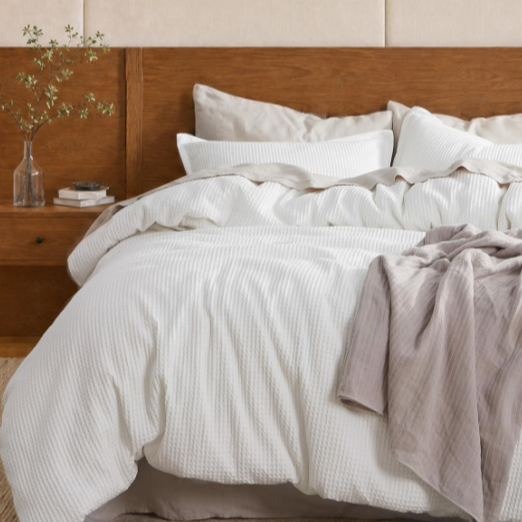
If clean lines and natural woods provide the structural skeleton of an organic modern living room, soft textiles provide its heart and soul. During the freezing winter months, layering high-quality, natural-fiber textiles is the single most effective way to turn a minimalist room into a cozy, inviting haven.
Have you ever run your hand over a slubby linen drape or wrapped yourself in a heavy alpaca throw and felt your entire body instantly relax?
In an organic modern framework, cozy textiles take the place of busy wall art or plastic decor. By mixing multiple fabric weights and weaves, you add rich tactile comfort while keeping the visual aesthetic clean and serene.
The Magic of Natural Fiber Fabrics
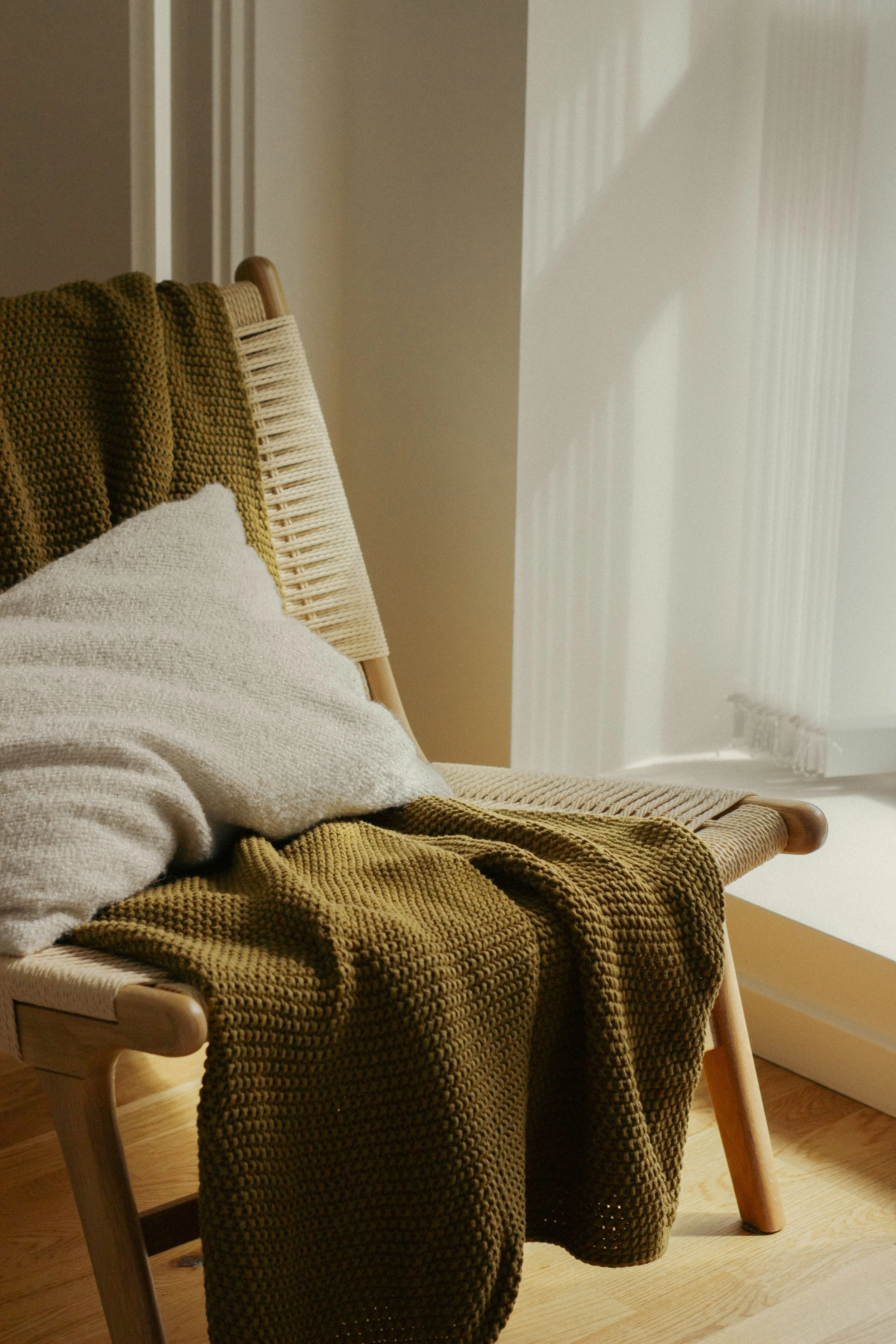
Bouclé and Slub Cotton: A bouclé or heavy slub cotton accent chair adds incredible architectural texture to a quiet corner. The looped, knotted yarns catch light beautifully, creating a soft shadow play that feels instantly welcoming.
Washed Linen Drapes: Replace thin synthetic curtains with floor-length, heavy-weight Belgian linen drapes in a warm oatmeal shade. Hanging drapes high near the ceiling and letting them puddle slightly on the floor adds vertical height while blocking out chilly winter drafts.
Alpaca and Cashmere Throws: Keep a folded wool, alpaca, or cashmere throw blanket casually draped over the arm of your sofa or resting in a woven seagrass basket. Opt for rich, muted tones like forest moss, warm camel, or burnt umber to add a subtle pop of seasonal color.
Plush Wool Area Rugs: Ground the room with a large, hand-knotted wool rug or an organic jute rug layered with a plush shearling accent. Wool is a natural insulator that keeps freezing winter air from rising through floorboards, ensuring your space feels warm from the ground up.
Element 4: Sculptural, Organic Shapes and Curvature
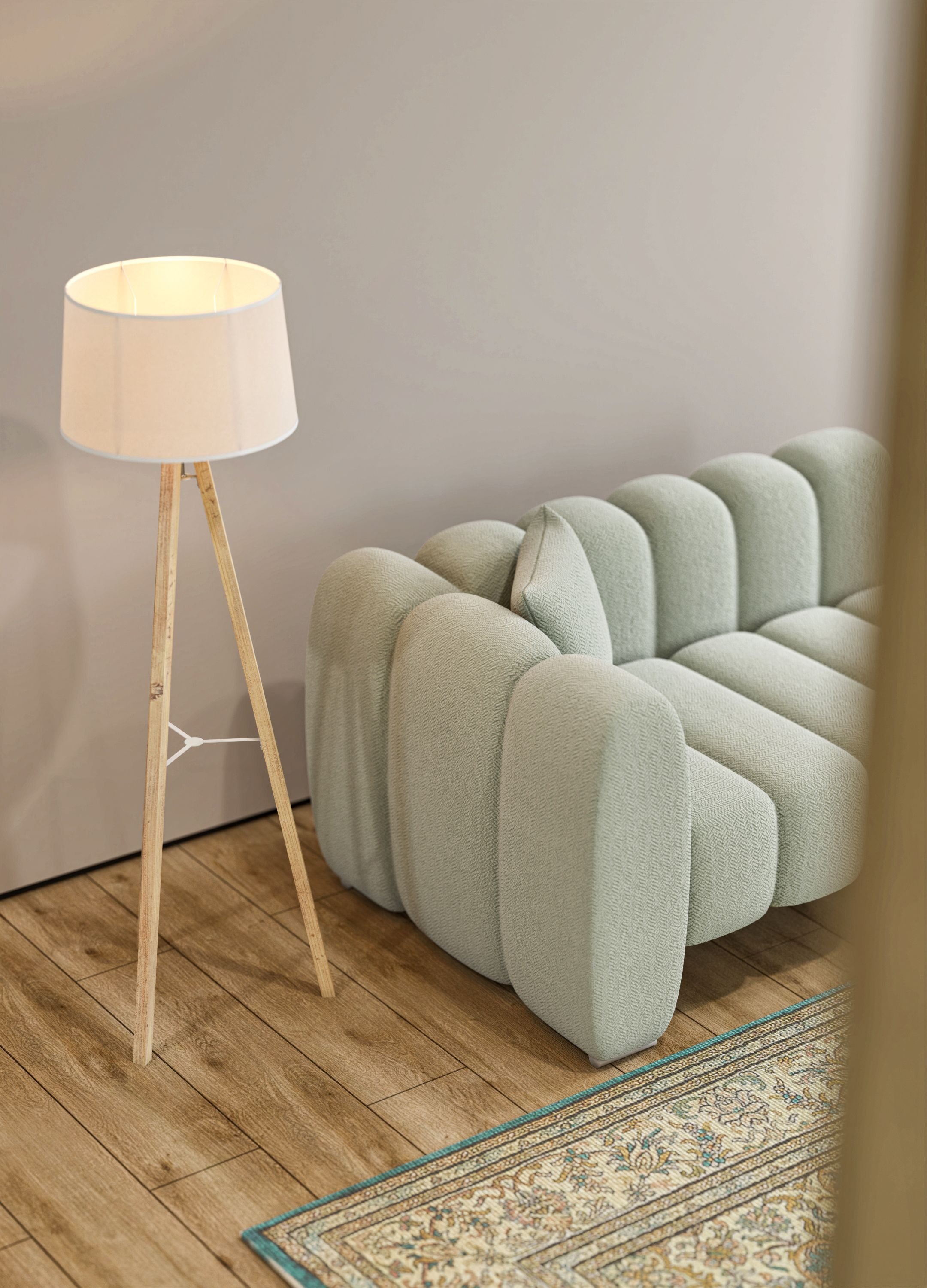
Traditional modern design is famous for its sharp 90-degree angles, rigid geometric grids, and straight lines. While clean lines bring structure and order, a room filled entirely with hard edges can feel overly formal and rigid. Organic modern design softens this architecture by incorporating gentle curves, arched silhouettes, and flowing, hand-sculpted forms inspired by nature.
Curved furniture naturally invites relaxation. A sofa with a gently rounded back, a oval coffee table, or an arched floor lamp breaks up the harsh linear boxiness of a standard rectangular room, creating a fluid layout that feels harmonious and welcoming.
Curating Sculptural Decor
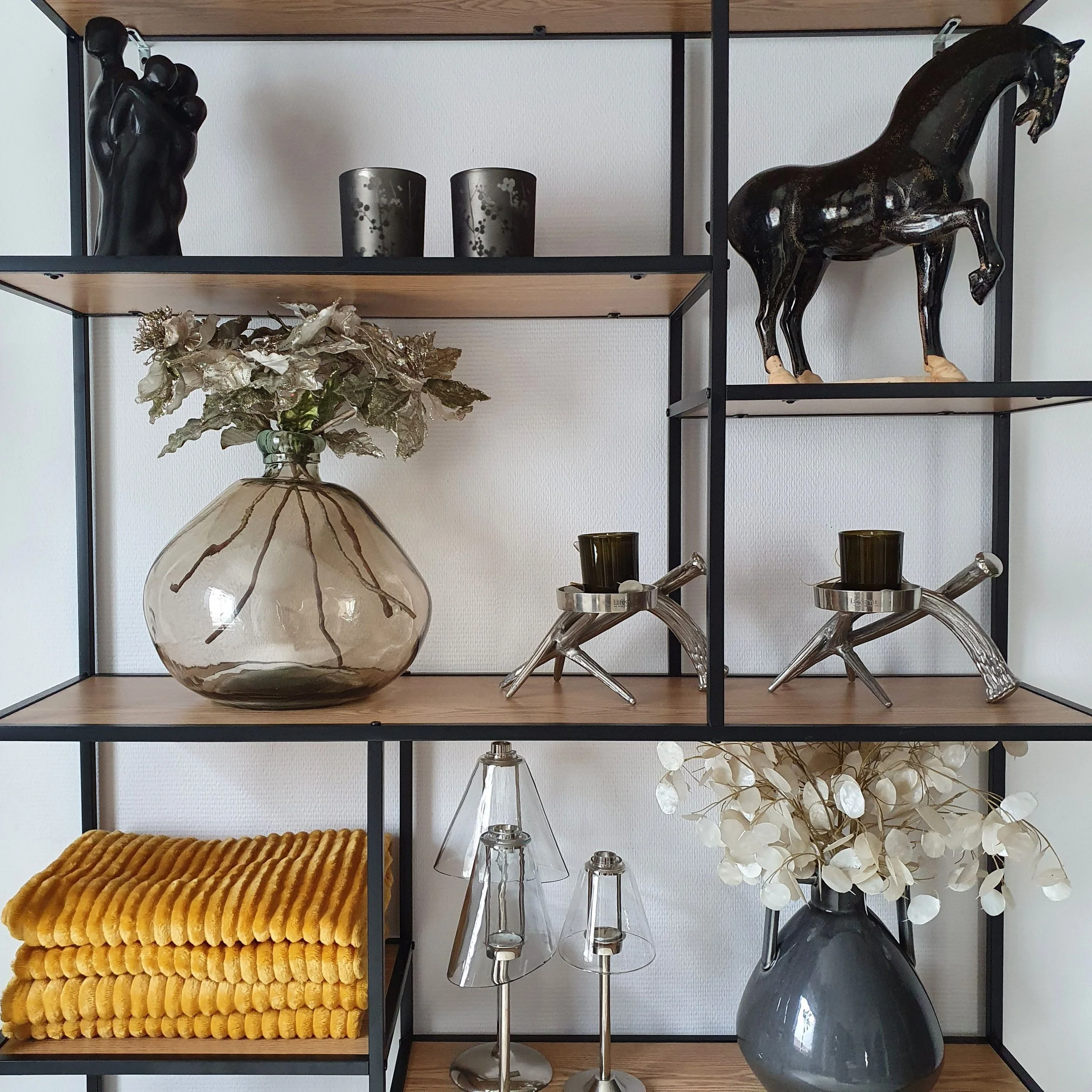
In addition to major furniture pieces, select decorative accents that feel hand-sculpted rather than mass-produced.
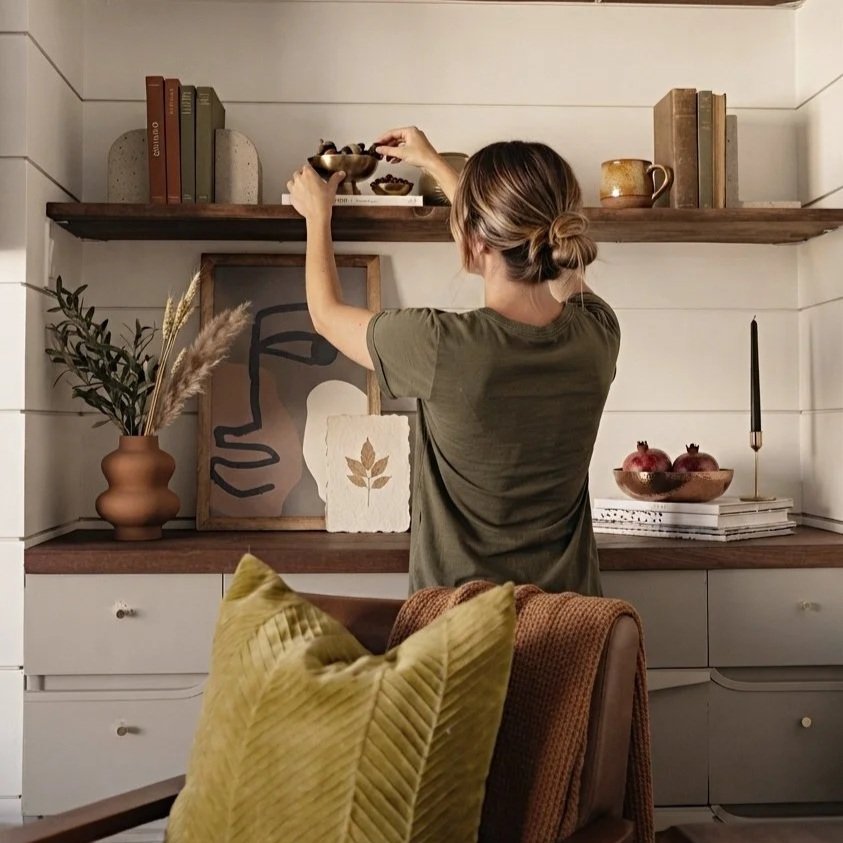
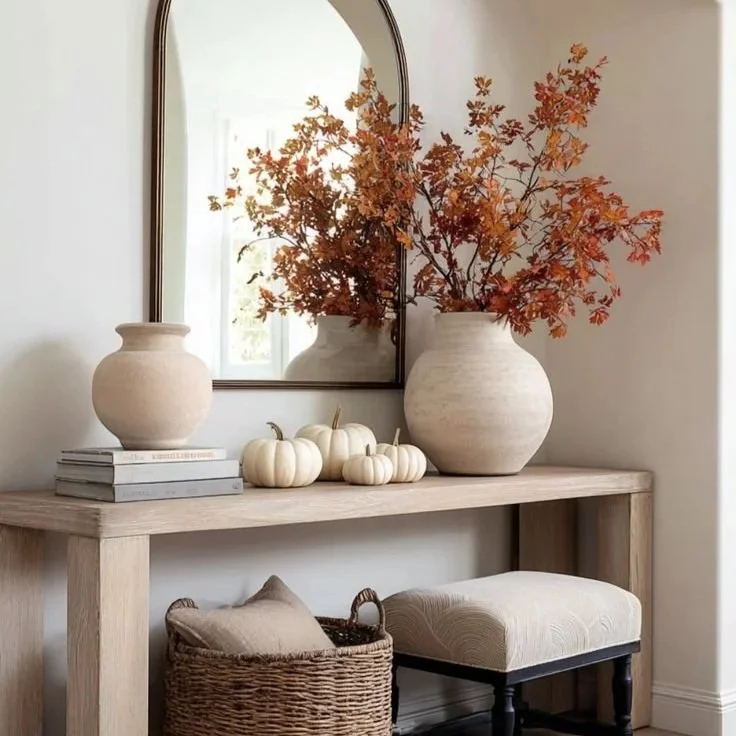
Display a collection of hand-thrown ceramic vases with asymmetrical shapes on a open shelf. Look for matte stoneware, unglazed clay, or terra-cotta pottery that showcases the maker’s touch. When left empty or filled with a few dried winter branches, these sculptural vessels act as functional art pieces that elevate your living room mantle or coffee table without adding visual clutter.
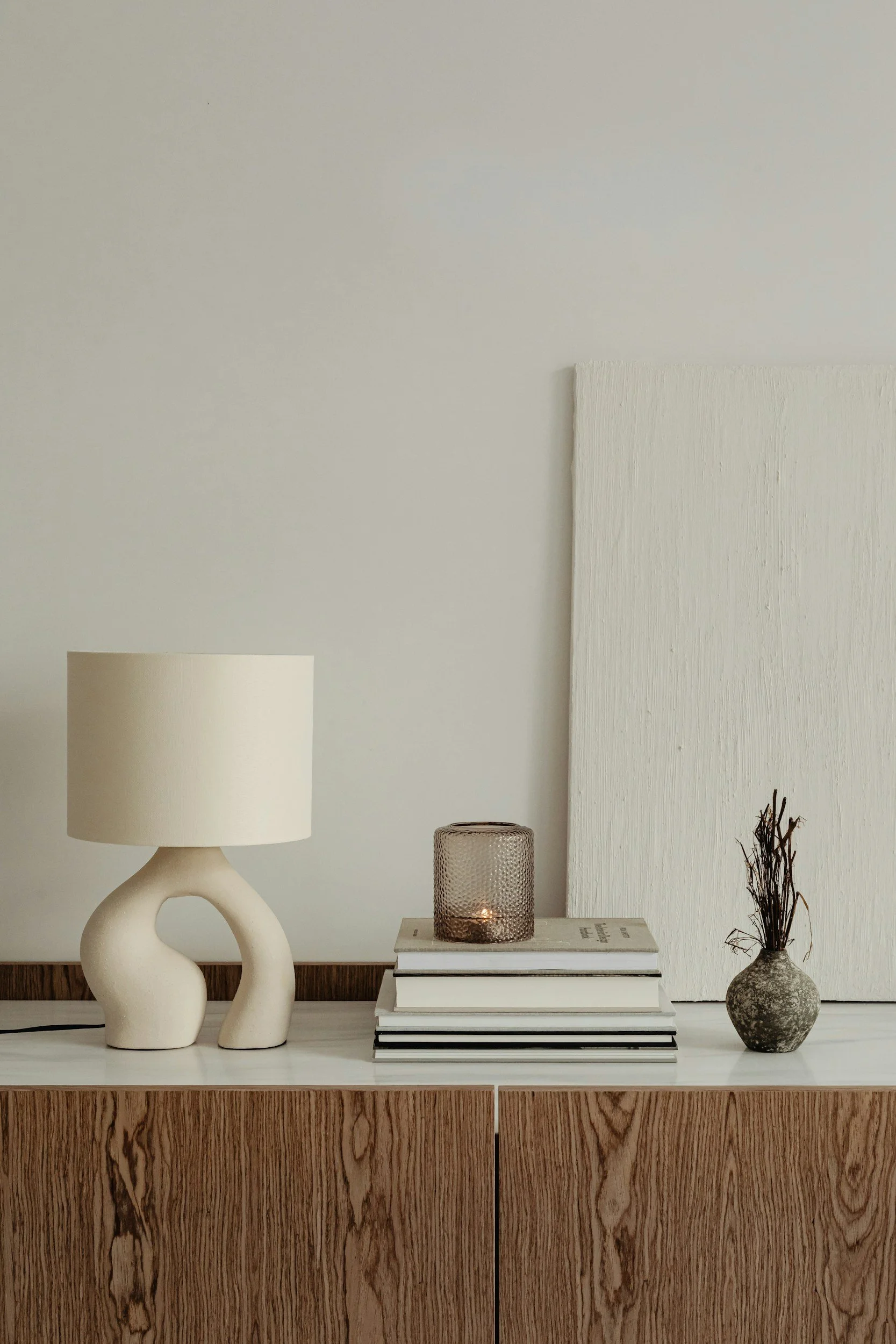
Element 5: Ambient Winter Lighting and Biophilic Accents
Lighting is the ultimate mood-setter in any interior, but during the dark, short days of winter, it becomes paramount. An organic modern living room shuns harsh overhead recessed lighting in favor of a warm, multi-layered lighting scheme that mimics the gentle glow of a sunset.
How do you keep your living room feeling bright and uplifting when the sun sets early in the late afternoon?
The secret lies in placing warm light sources at varying heights throughout the room, pairing them with natural, biophilic elements that keep your home connected to the living world.
Layering Warm Ambient Light
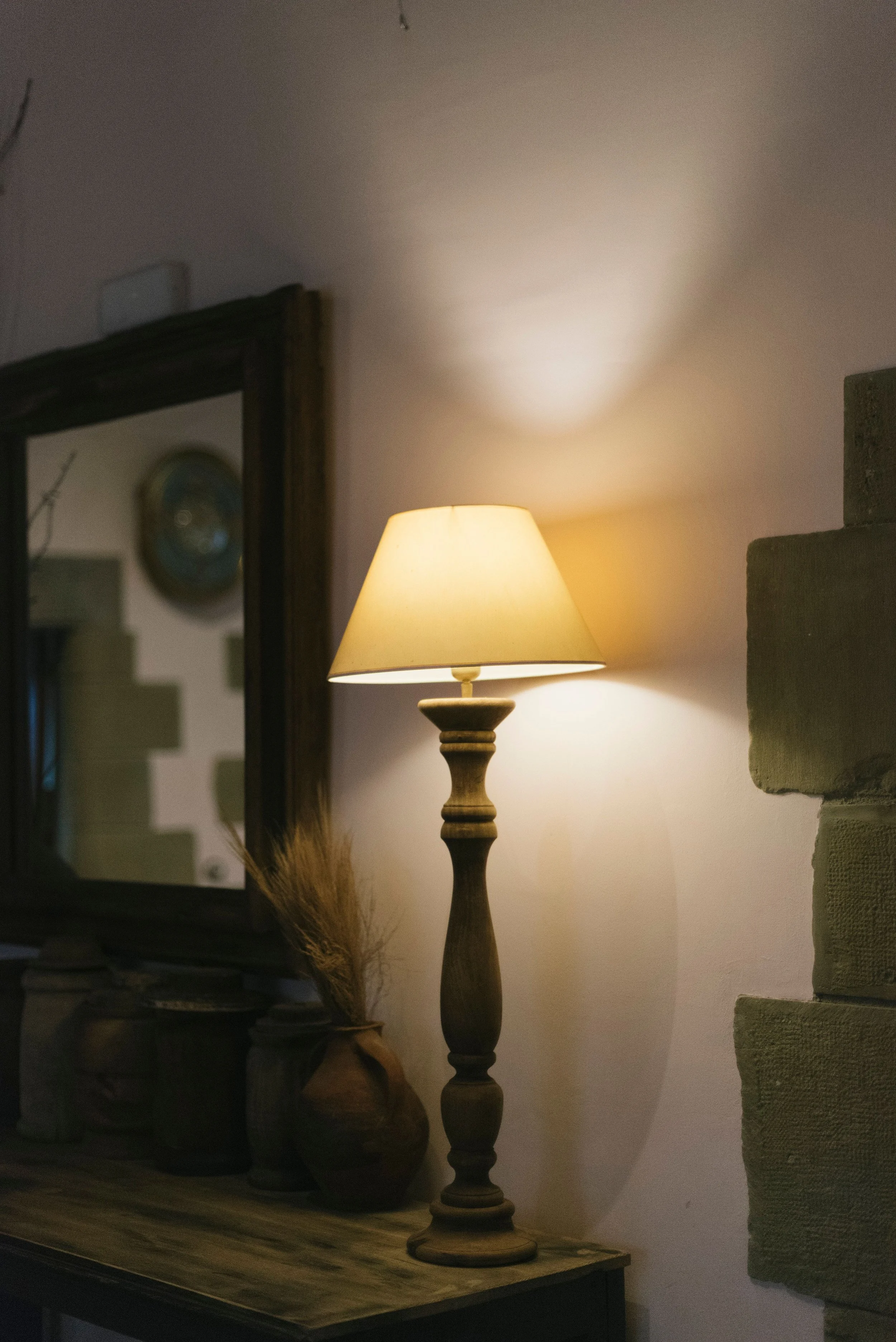
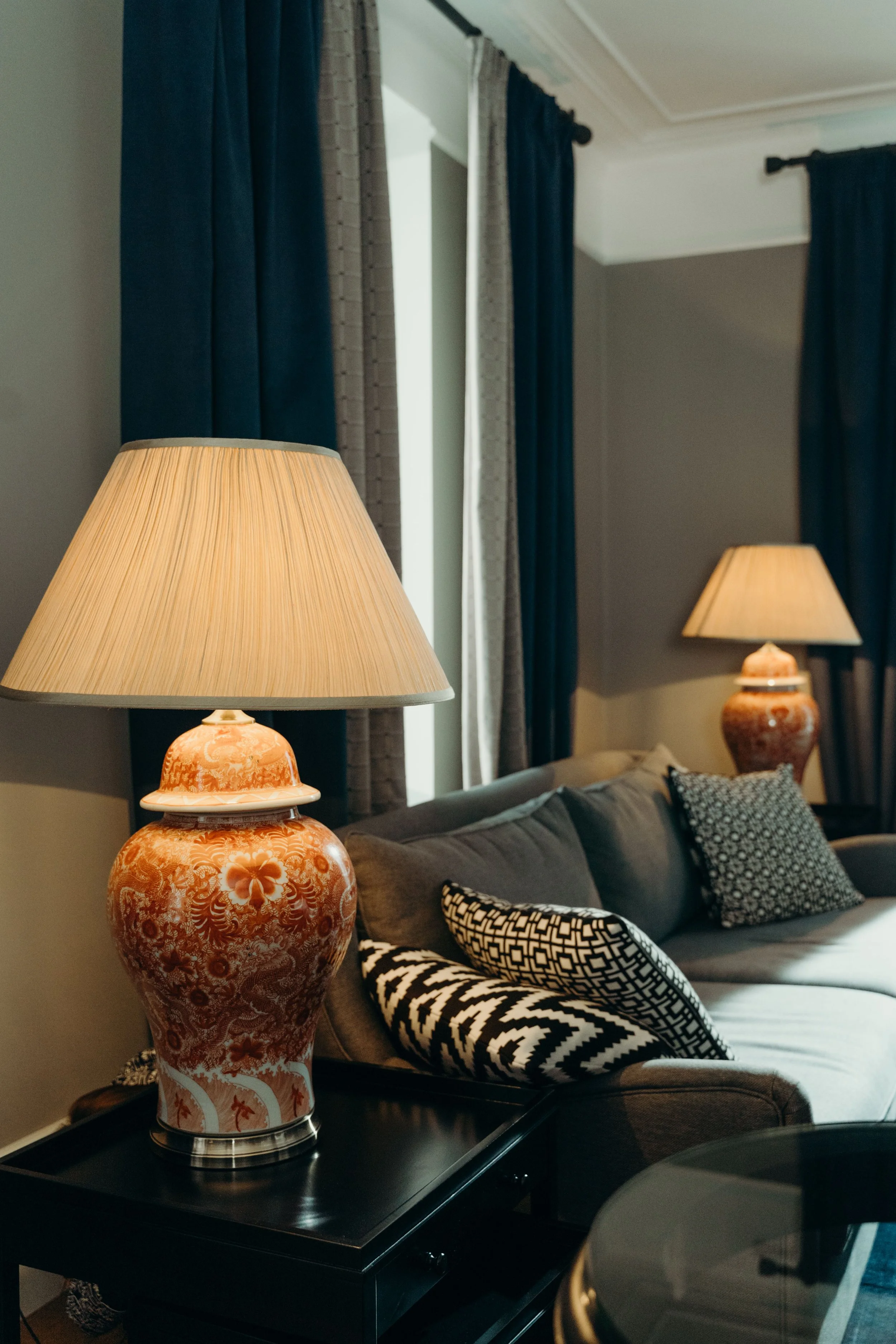
Aim for warm-toned light bulbs (around 2700 Kelvin) across all your lamps. Combine an arched brass floor lamp in a reading corner, a ceramic table lamp with a textured linen shade on a side table, and subtle LED picture lights highlighting natural artwork.
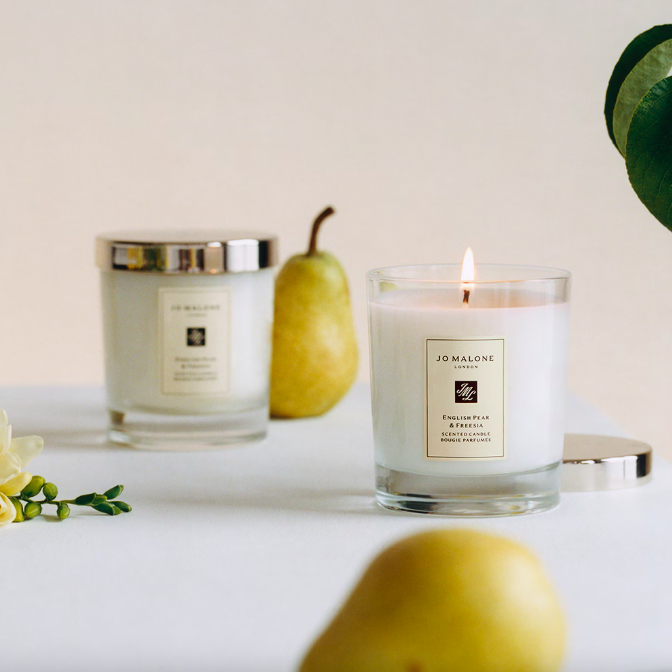
And, of course, do not underestimate the transformative power of real flame. A flickering fire in the fireplace, or a cluster of unscented soy-wax pillar candles placed inside ceramic or glass hurricanes, provides an intimate, golden ambient glow that instantly makes cold winter nights feel special.
Winter Biophilic Design
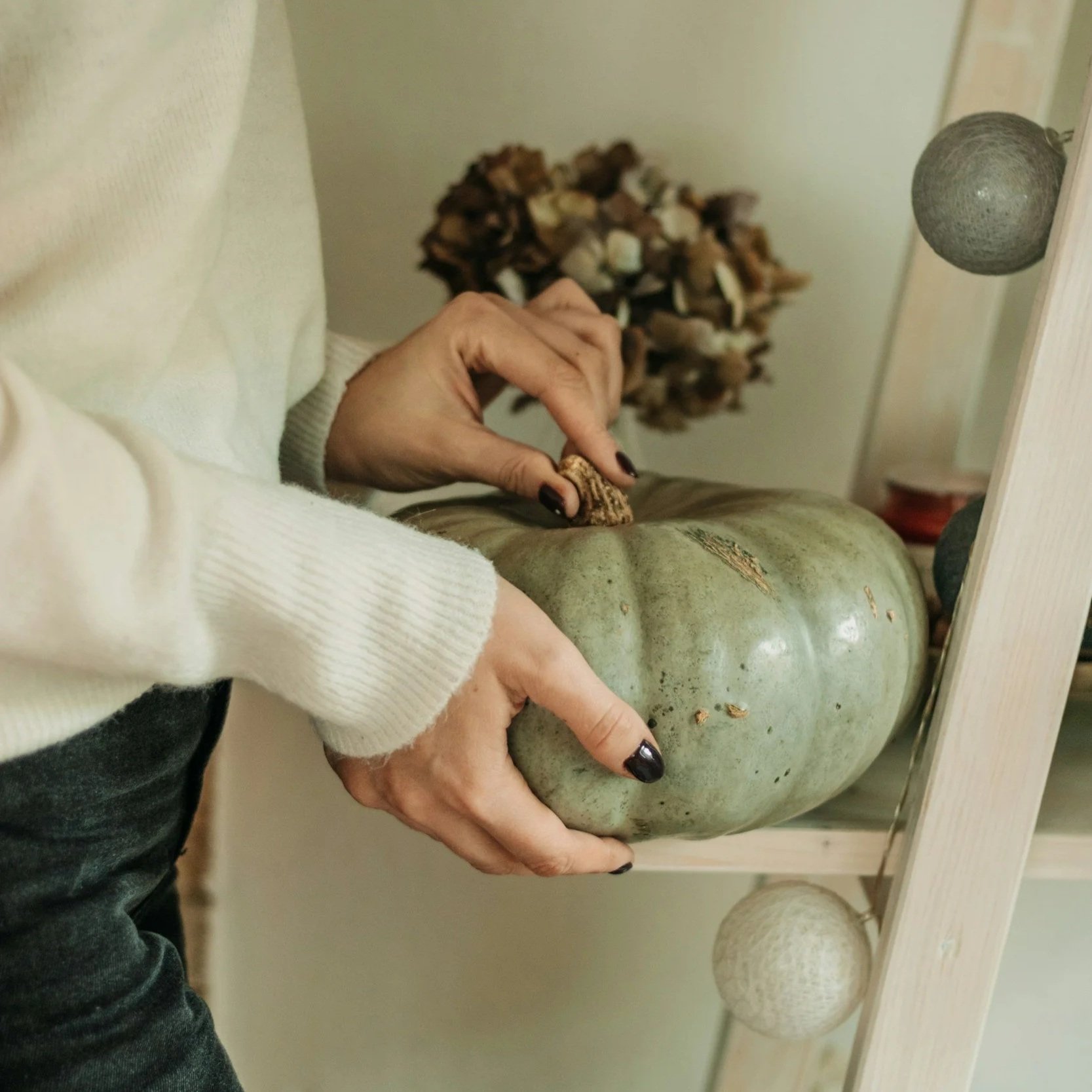
Bringing nature inside should not stop when the leaves fall outside. Swap out vibrant green summer botanicals for textural winter flora. Arrange tall, dried magnolia branches, wild winter berry stems, or bare birch branches in a large ceramic floor urn. The architectural shadows cast by bare branches against a warm, lime-washed wall create a hauntingly beautiful, poetic focal point that celebrates the quiet beauty of the season.
Bringing It All Together: The Intentional Living Room
Creating an organic modern living room is not about completing a rapid weekend makeover or buying every trendy item on social media. It is a slow, thoughtful process of editing out what is unnecessary and curating pieces that bring genuine warmth, utility, and visual peace into your home.
When you focus on earthy neutral tones, raw natural materials, rich winter textiles, sculptural curves, and warm ambient lighting, your living space becomes far more than just a beautifully decorated room. It transforms into a true sanctuary—a grounded, quiet luxury space that nourishes your well-being and wraps you in comfort all winter long.
Which organic modern element will you be introducing to your living room space this winter season?
You May Also Like: