The Rosie Home Edit contains affiliate links. If you make a purchase through these links, we may receive a commission. Thank you for supporting the work we do to curate this space.

Your entryway is arguably the most important architectural transition space in your entire home, yet it is consistently the most neglected. It serves as the physical boundary between the chaotic, fast-paced outside world and the calm, intentional sanctuary you are trying to cultivate inside your walls.
It is the very first thing that greets your eyes when you unlock the front door after a long, exhausting day at work, instantly signaling to your nervous system whether it is safe to relax or time to feel stressed. It is also the very first impression your guests receive of your lifestyle when they step inside.
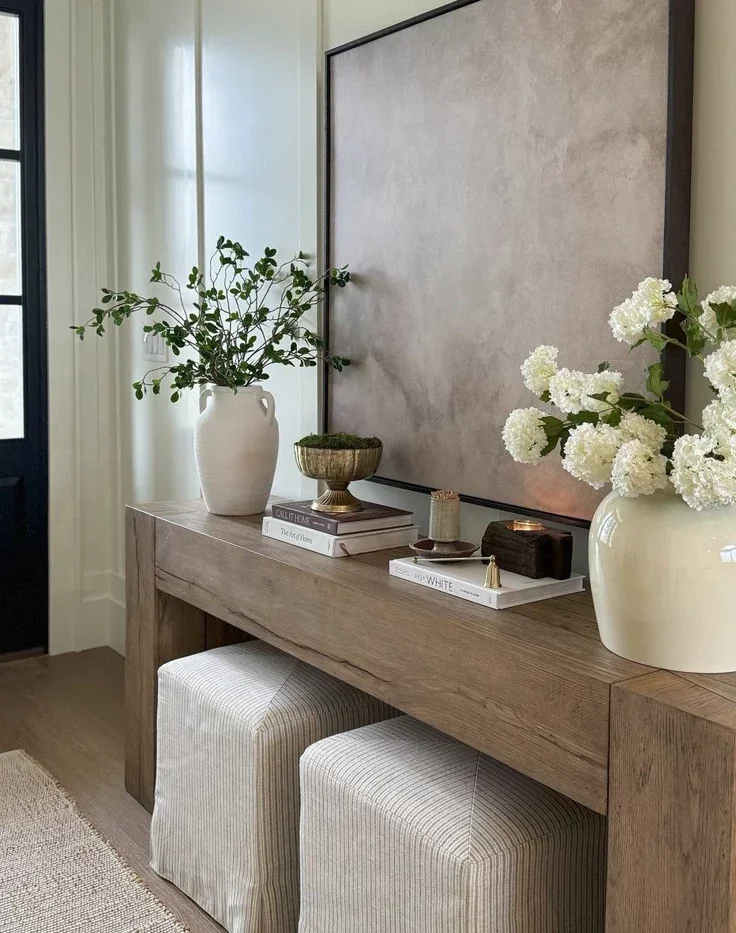
Despite its massive energetic importance, the entryway console table frequently deteriorates into a chaotic, stressful dumping ground for discarded shoes, junk mail, loose change, grocery receipts, and tangled dog leashes. When a surface is unstyled and unorganized, it naturally invites clutter to pile up.
Transforming your entryway table into a serene, beautiful vignette doesn't require a massive budget, a professional interior designer, or an endless shopping spree at high-end boutiques. Instead, you simply need to learn how to apply a foundational, time-tested secret used by stylists worldwide: the Rule of Threes.
✦ THE CURATED ENTRYWAY: THE FORMULA AT A GLANCE
The Anchor Piece (Tall): Start with one vertical element like a sculptural table lamp or tall ceramic vase to ground the space.
The Mid-Height Element: Add a medium-scale item like a framed piece of art leaning against the wall or a textured floral arrangement.
The Low/Functional Tray: Finish with a shallow decorative tray or catch-all dish for keys and daily essentials to keep clutter hidden.
The Psychology of the Rule of Threes

Before we dive into the physical styling steps, it is essential to understand why the Rule of Threes is so incredibly powerful. In interior design, architecture, and visual arts, the human brain is wired to process information through pattern recognition.
When we see objects arranged in even numbers like pairs of two or four, our brains instantly see symmetry, which can often translate as rigid, clinical, artificial, or corporate. Even numbers feel static.
Odd numbers, however, disrupt this rigid symmetry and force the eye to move dynamically across a space. Three is the smallest number required to create a distinct visual pattern. An arrangement of three items introduces a sense of balance, harmony, and visual tension that feels completely natural, organic, and effortlessly chic.
The Rule of Threes takes the guesswork out of decorating. It provides a foolproof visual formula that allows you to edit out the unnecessary noise and create an entryway that feels intentionally curated, structurally balanced, and deeply grounded.
Step 1: Establish Your Large Visual Anchor

The first step in styling your console table is to establish your primary anchor point. This is your largest item, and it serves as the focal point that captures the eye from across the room, anchoring the entire vignette so it doesn’t look like it’s floating aimlessly against a blank wall.
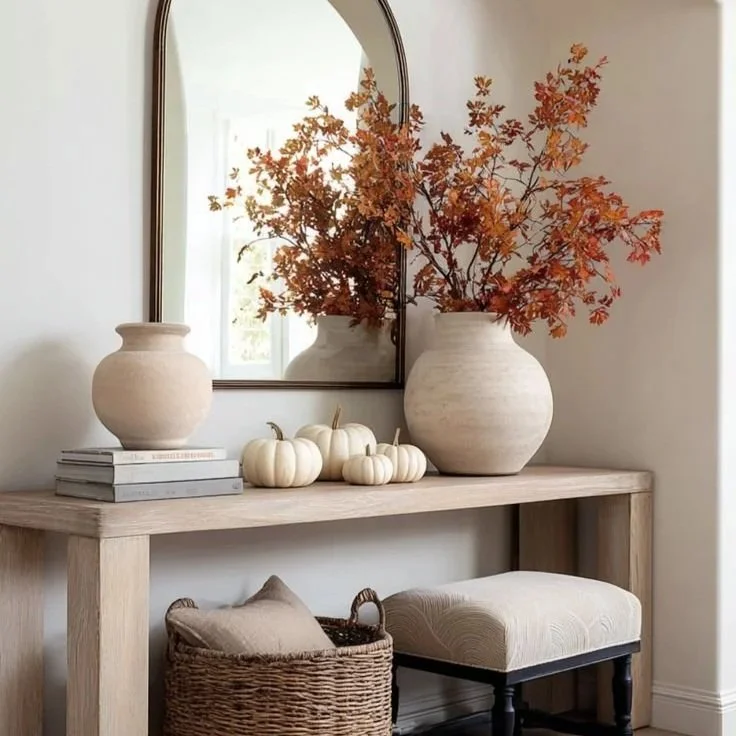
The absolute best anchor item for an entryway console table is an oversized round mirror. A mirror works miracles in a narrow hallway or entry space: it bounces natural light around the room, instantly making a cramped foyer feel significantly larger, brighter, and more open. From a practical standpoint, it also gives you a convenient spot for a quick outfit and hair check before you walk out the door.
Choose a mirror with a minimalist frame that matches your aesthetic, a thin matte black metal trim adds a subtle modern edge, while a frame made of raw, lightly white-washed oak introduces a beautiful layer of organic warmth.

If a mirror doesn't fit your layout, you can easily swap it for a single piece of large, understated abstract artwork. Look for minimalist canvas pieces or framed prints featuring soft, earthy tones, neutral plaster textures, or simple line drawings. Hang the mirror or artwork centered directly above the console table, keeping the bottom edge roughly 6 to 8 inches above the tabletop surface so the two elements feel visually connected as a single, cohesive unit.
✦ IN THIS GUIDE: We break down scale, height variation, and clutter control. Completing your home's first impression? Pair this guide with our post on How to Make Your Living Room Feel Like a Cozy Fall Sanctuary.
Step 2: Introduce Your Secondary Vertical Element

With your large anchor securely in place above the table, it is time to move onto the surface itself and introduce your second design element. This item needs to provide vertical height, sitting off to one side of your table to create a beautiful asymmetrical balance with your hanging anchor.
The perfect choice here is a substantial, heavy-bottomed ceramic or stoneware vase. Look for vessels that showcase artisanal craftsmanship, think rough, textured clay, aged terracotta, or a matte white glaze with subtle speckled imperfections.
The height of this vase should reach roughly one-third to one-half of the way up your mirror or artwork, creating a dynamic diagonal line for the eye to follow.

To make the vase come alive, skip the stiff, perfectly symmetrical artificial floral arrangements from the store. Instead, practice the art of slow curation by stepping outside into your yard with a pair of shears.
Look for structural branches with large green leaves, delicate olive branches, or even bare, sculptural twigs in the winter. Forage a few long, imperfect stems and place them loosely in the vase, allowing them to lean naturally to one side.
This brings a vital, untamed touch of nature directly into your home, softening the clean architectural lines of the console table.
To add natural height to your entryway console, try styling giant foraged branches alongside a low catchall bowl.
Integrating a Harmonious Culinary Vibe

When your home's entry point is beautifully balanced, it instantly creates a sense of peace that naturally ripples throughout the rest of your living spaces. A curated home is a connected home.
The exact same design principles that make a console table look stunning, asymmetry, visual editing, and texture are what make an interactive hosting experience feel so luxurious.
Once you have mastered the entryway, you can easily carry that exact same curated, high-end design energy straight into your kitchen. Take a look at our complete guide on How to Assemble a High-End Charcuterie Board to see how the rules of visual balance can transform a simple evening appetizer into a gorgeous centerpiece that perfectly mirrors the aesthetic of your beautifully styled home.
Step 3: Ground the Look with a Functional Low Element

The final step in your styling formula is to introduce your third element, which will sit on the opposite side of the table from your tall vase. This item must be low-profile, grounding the layout and bringing essential functionality to the space.
The ultimate design tool for this step is a small stack of beautiful, heavy coffee table books. Select two or three hardcover books that feature minimalist spines in neutral linen or earth tones, focusing on topics that inspire you, such as organic architecture, minimalist interior design, slow travel, or fine art photography. Stack them horizontally, largest on the bottom, to create a stable, elevated pedestal.

On top of this book stack, place your final functional piece: a small, beautiful catchall dish. This can be a hand-carved marble dish, a polished travertine bowl, or a small hammered brass tray. This tiny bowl is the practical workhorse of your entryway; it is the dedicated, intentional home for your daily keys, sunglasses, and wallet.
By giving these items a specific, stylish container, you prevent them from scattering across the surface, keeping your entryway completely organized, functional, and breathably beautiful every single day.
Want to extend this curated look into your sitting area? Browse our top picks for affordable organic modern throw pillows.
You May Also Like: